Welcome to our Organic store Bluswan Indus Pvt Ltd! | +91 9346545670 (Main Office) | +91 7794920404 (Machines)
Welcome to our Organic store Bluswan Indus Pvt Ltd! | +91 9346545670 (Main Office) | +91 7794920404 (Machines)
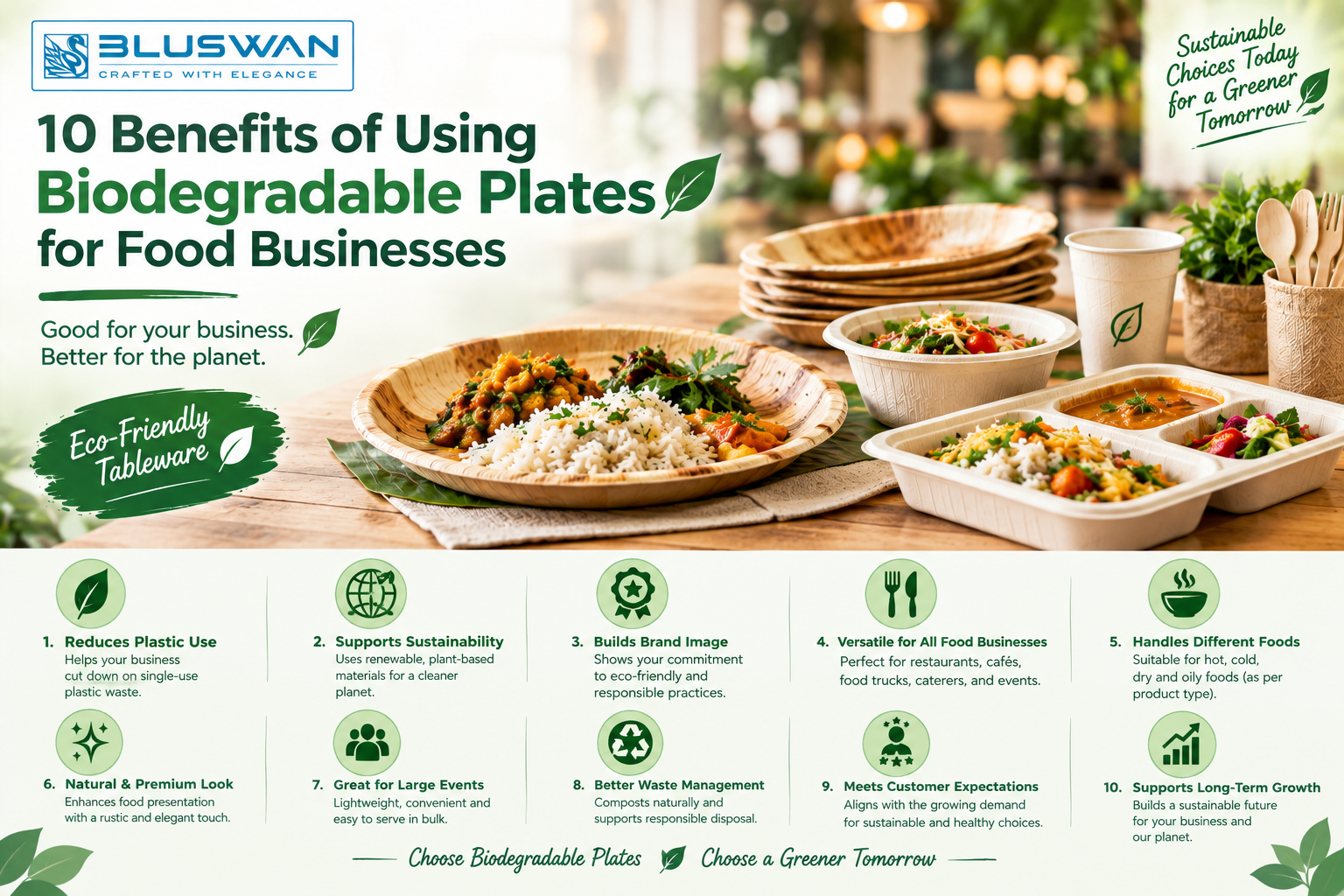
The food industry is changing rapidly as restaurants, cafés, caterers, cloud kitchens, food trucks, and event organizers look for better alternatives to conventional plastic tableware. One of the simplest changes a food business can make is switching from traditional disposable plastic plates to biodegradable plates.
Biodegradable plates are made from materials that can break down naturally under suitable conditions. Depending on the product, common materials include sugarcane bagasse, areca palm leaves, rice bran, wheat bran, and other plant-based fibres.
For food businesses, the decision is not only about environmental responsibility. The right biodegradable plates can also improve customer experience, support a sustainable brand image, simplify food service, and provide practical solutions for dine-in, takeaway, catering, and events.
In this blog, let's explore 10 important benefits of using biodegradable plates for food businesses and why they are becoming an increasingly popular tableware option.
One of the biggest benefits of biodegradable plates is that they can help food businesses reduce their dependence on conventional plastic disposable plates.
Restaurants and catering businesses can use hundreds or even thousands of disposable plates every month. When conventional plastic products are used for short periods and discarded, they contribute to the growing volume of waste.
Switching some disposable tableware categories to plant-based alternatives can be a practical step toward reducing plastic use.
For example, a restaurant can choose:
Businesses don't necessarily need to change everything at once. They can start with one product category and gradually expand their sustainable tableware range.
Modern customers increasingly pay attention to how businesses operate and what happens to the products they use.
When a restaurant chooses biodegradable plates made from plant-based materials, it demonstrates an effort to move toward more responsible food-service practices.
Materials such as sugarcane bagasse are produced from agricultural fibre, while areca leaf plates are made from naturally shed areca palm leaf sheaths.
This makes plant-based tableware an attractive option for businesses that want to reduce their reliance on petroleum-based disposable products.
A sustainable food-service model can include several small changes:
Together, these changes can create a more environmentally conscious business operation.
Today, customers don't only evaluate restaurants based on taste and price. They may also notice presentation, packaging, service, and the overall values of a business.
Using biodegradable plates can become part of a restaurant's sustainability story.
For example, a café using plant-based takeaway packaging can communicate its commitment through social media, packaging labels, menus, or in-store displays.
A simple message such as:
"We choose plant-based tableware to reduce unnecessary plastic use."
can help customers understand why the business selected a particular product.
For eco-conscious customers, these visible choices can make a restaurant feel more aligned with their values.
Biodegradable plates are not limited to one type of food business.
They can be useful across many food-service applications, including:
Restaurants can use biodegradable plates for special events, outdoor dining, buffets, or takeaway orders.
Caterers can use disposable plant-based plates for weddings, parties, corporate functions, and large gatherings.
Food trucks can benefit from lightweight disposable tableware that makes serving and cleanup easier.
Cafés can use suitable biodegradable bowls and plates for snacks, desserts, breakfast items, and other menu products.
Cloud kitchens can combine biodegradable plates or containers with sustainable takeaway packaging.
Large events can generate significant quantities of disposable tableware waste. Plant-based alternatives can provide a more sustainability-focused option.
Because these products are available in different sizes and shapes, businesses can select tableware according to their menu and serving requirements.
A common concern among food businesses is whether biodegradable plates can handle different types of food.
The answer depends on the material, product design, thickness, and manufacturer's specifications.
Good-quality products are available for a variety of applications, including:
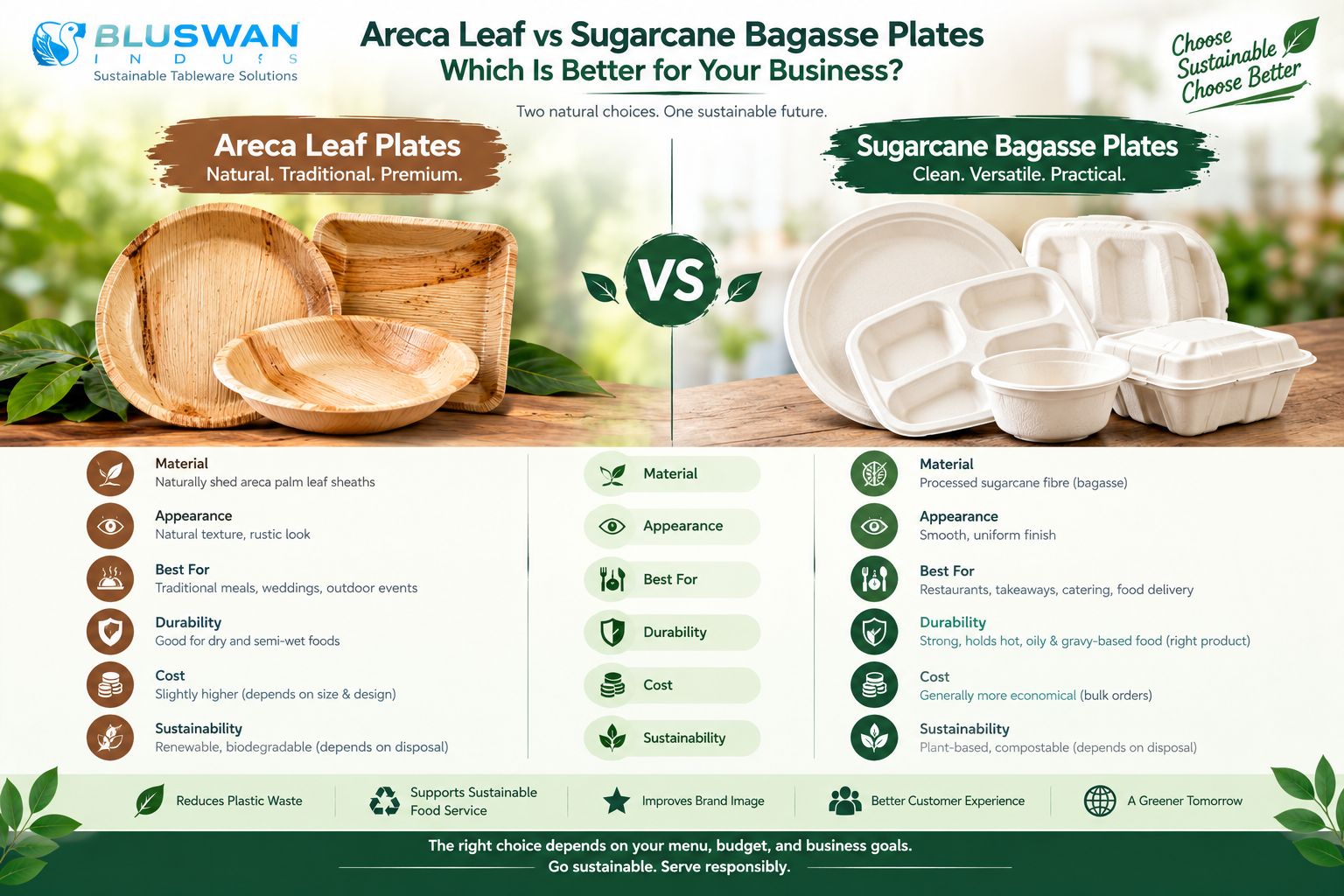
Sugarcane bagasse plates, for example, are commonly used for food-service applications because they are made from moulded plant fibre and are available in different shapes and sizes.
Areca leaf plates can provide a natural, premium appearance that works particularly well for traditional meals, weddings, outdoor events, and catering.
Food businesses should always check the supplier's specifications for heat, moisture, oil resistance, and intended food-contact use before selecting a product.
Not all disposable tableware has to look basic.
Areca leaf plates, in particular, have a natural texture and appearance that can create a distinctive presentation.
The natural colour and visible leaf pattern can work well with:
Bagasse products, on the other hand, generally have a clean and modern appearance.
This gives food businesses different options depending on their brand identity.
A premium presentation can make even disposable food service feel more thoughtful and professional.
Large events require careful planning. Organizers need to think about serving speed, storage, transportation, cleaning, and waste management.
Reusable crockery can require significant washing and handling, while disposable tableware can simplify certain event operations.
Biodegradable plates can be useful for:
For caterers, lightweight disposable tableware can also make transportation and distribution easier.
However, businesses should plan the required quantity carefully to avoid unnecessary product waste.
A simple calculation can help:
Number of guests × plates per guest + extra stock = required quantity
For example, for 500 guests, a caterer might plan for more than 500 plates depending on the menu and serving style.
Choosing biodegradable plates is only one part of responsible waste management.
How the products are disposed of also matters.
Food businesses should understand the disposal requirements of the specific tableware they purchase. Products marketed as biodegradable or compostable may require particular environmental conditions to break down effectively.
Businesses can improve waste management by:
It is important not to assume that every product labelled "biodegradable" can break down quickly in any environment.
Responsible disposal should always be considered when selecting sustainable tableware.
Customers are becoming more aware of packaging and disposable products.
Someone ordering food online may notice whether the restaurant uses plastic containers, paper packaging, bagasse containers, or other alternatives.
Similarly, guests at weddings and corporate events may appreciate businesses that make more environmentally responsible choices.
This doesn't mean customers will choose a restaurant only because it uses biodegradable plates. Food quality, service, pricing, hygiene, and convenience remain important.
However, sustainable packaging can become an additional positive factor.
Restaurants can use this opportunity to communicate their efforts honestly rather than making exaggerated environmental claims.
For example:
"Our takeaway packaging uses plant-based materials where suitable."
is more useful than making broad claims without explaining the product or disposal method.
The final benefit is broader than simply replacing plastic plates.
Choosing biodegradable plates can encourage food businesses to review their entire approach to packaging and disposable products.
Once a restaurant starts looking at its tableware, it may also review:
This can lead to a more organized and sustainability-focused purchasing strategy.
Businesses can also compare products based on more than just price.
Important factors include:
The cheapest disposable plate is not always the most cost-effective choice. A stronger product that performs well with the restaurant's menu may provide better value.
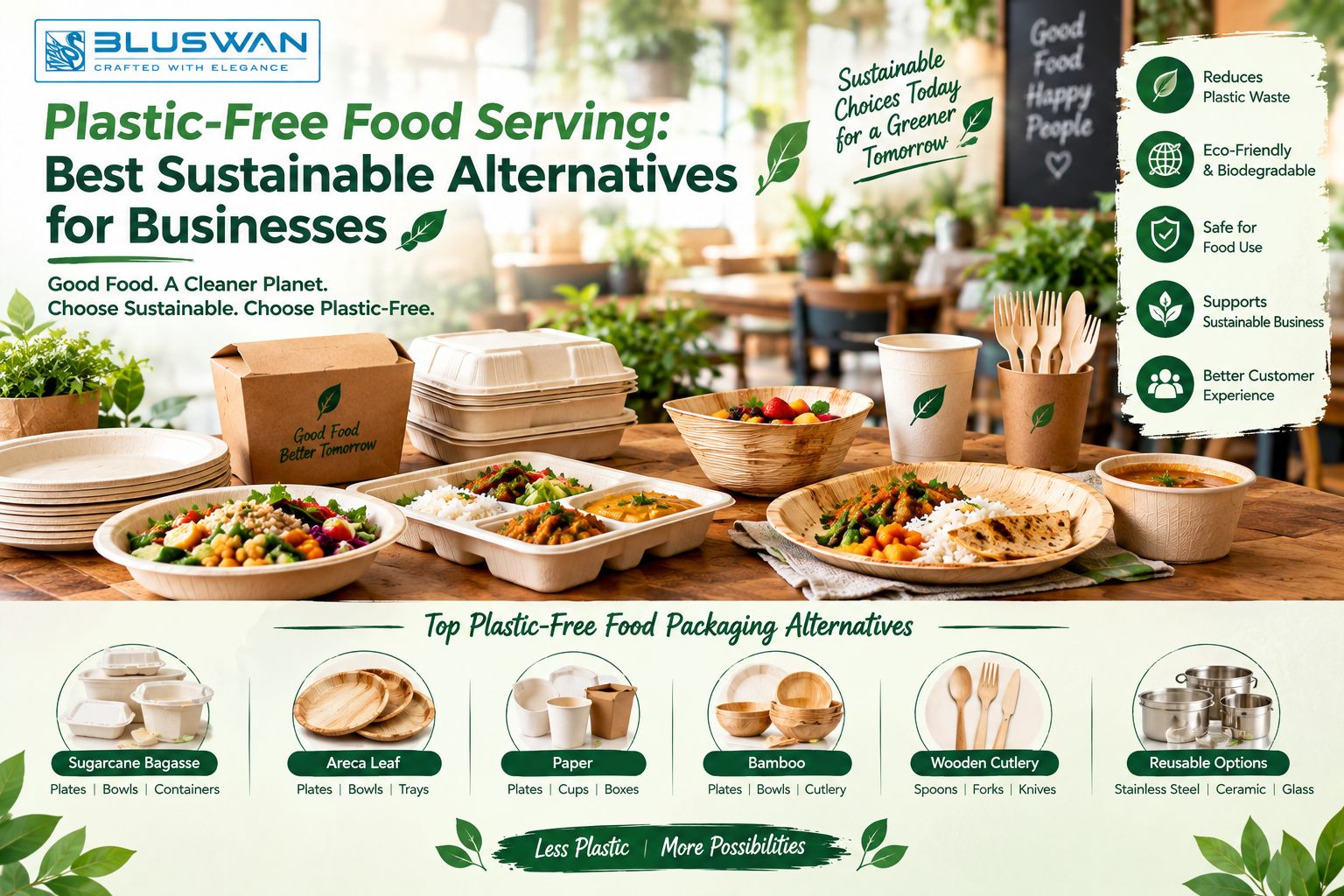
Food businesses have several plant-based tableware options to consider.
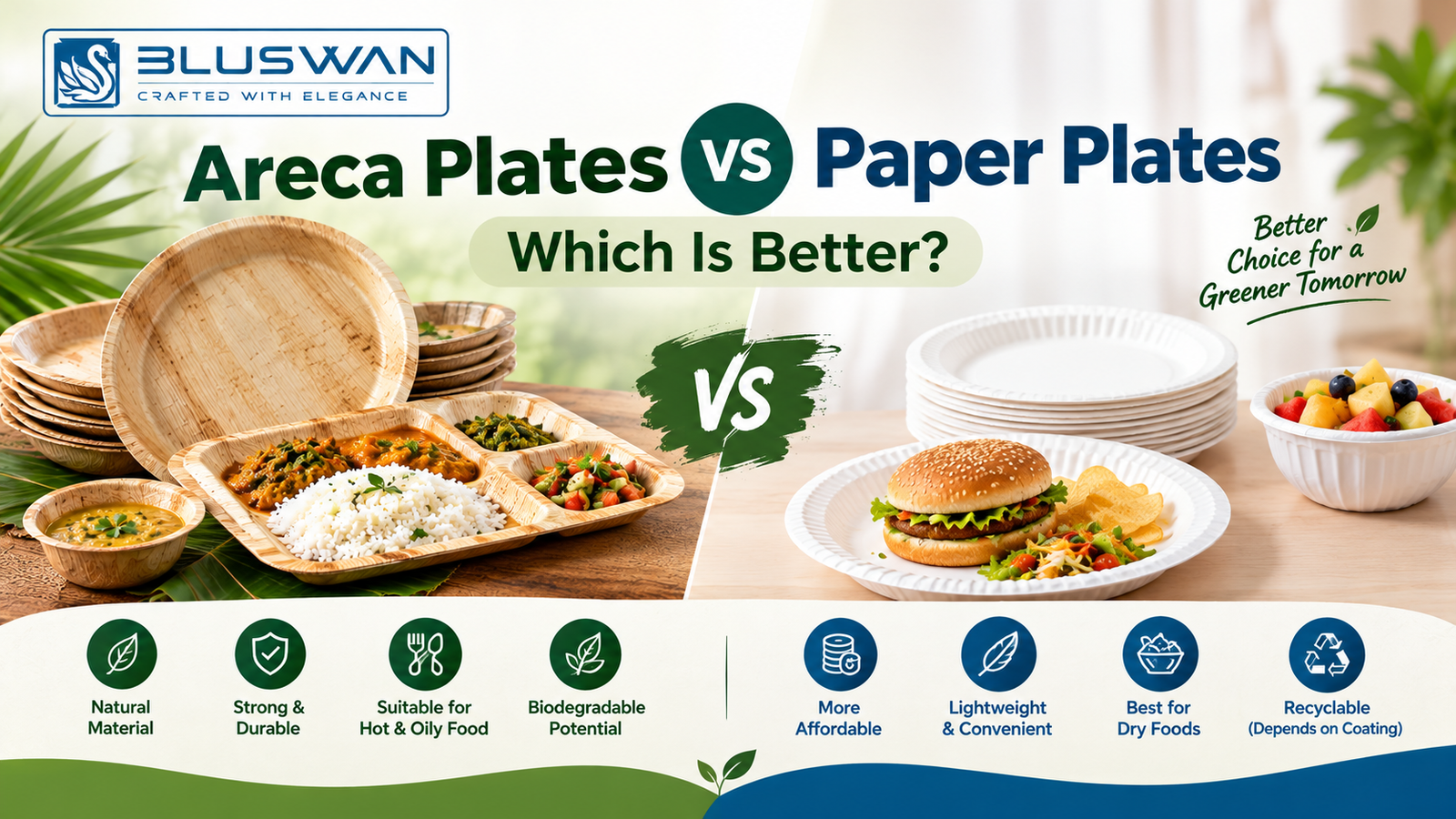
Bagasse plates are made from sugarcane fibre left after juice extraction. They are commonly available in round, square, compartment, and other designs.
They are suitable for many food-service applications when the product is properly manufactured and intended for food contact.
Areca leaf plates are made from naturally shed areca palm leaf sheaths. They have a distinctive natural appearance and are popular for traditional meals, catering, weddings, and events.
Rice bran can also be used as a plant-based material for certain tableware products. These products can be considered by businesses looking for alternatives made from agricultural materials.
Wheat bran is another agricultural material that can be used in some disposable food-service products.
The right choice depends on the business's menu, budget, presentation requirements, and disposal arrangements.
Before purchasing biodegradable plates in bulk, food businesses should consider several factors.
A plate designed for dry snacks may not be the best choice for curry, gravy, or oily food.
Select sizes according to the portions you normally serve.
The plate should comfortably support the intended food without bending or leaking.
Always purchase products intended for food contact and follow the manufacturer's usage instructions.
Understand whether the product is biodegradable, compostable, or recyclable and what conditions are required for its end-of-life treatment.
A reliable supplier can provide consistent quality, product specifications, and suitable packaging for bulk orders.
For restaurants, caterers, event organizers, and other food businesses looking for plant-based disposable tableware, Bluswan Indus offers a range of sustainable food-service options.
Businesses can explore products such as areca leaf and sugarcane bagasse tableware based on their specific serving requirements.
Instead of choosing tableware only by appearance or price, businesses should consider the complete application—from food compatibility and product strength to storage and responsible disposal.
The right product can help create a better customer experience while supporting a more thoughtful approach to disposable food service.
The shift toward biodegradable plates is more than a trend. For food businesses, it can be a practical way to rethink disposable tableware and reduce reliance on conventional plastic products.
From restaurants and cafés to caterers, cloud kitchens, food trucks, weddings, and large events, plant-based plates can offer a combination of convenience, presentation, and sustainability when the right products are selected and disposed of appropriately.
The 10 key benefits include:
For food businesses planning to make their operations more environmentally responsible, switching selected disposable products to suitable biodegradable alternatives can be a simple place to start.
Choose the right material, verify the product's food-service suitability, and plan for responsible disposal. Sustainable tableware works best when the entire process—from purchase to disposal—is considered.

2026 © All rights reserved by Bluswan indus Pvt Ltd
Powered by : Innoplus TechnologiesYour item has already added in wishlist successfully


