Welcome to our Organic store Bluswan Indus Pvt Ltd! | +91 9346545670 (Main Office) | +91 7794920404 (Machines)
Welcome to our Organic store Bluswan Indus Pvt Ltd! | +91 9346545670 (Main Office) | +91 7794920404 (Machines)
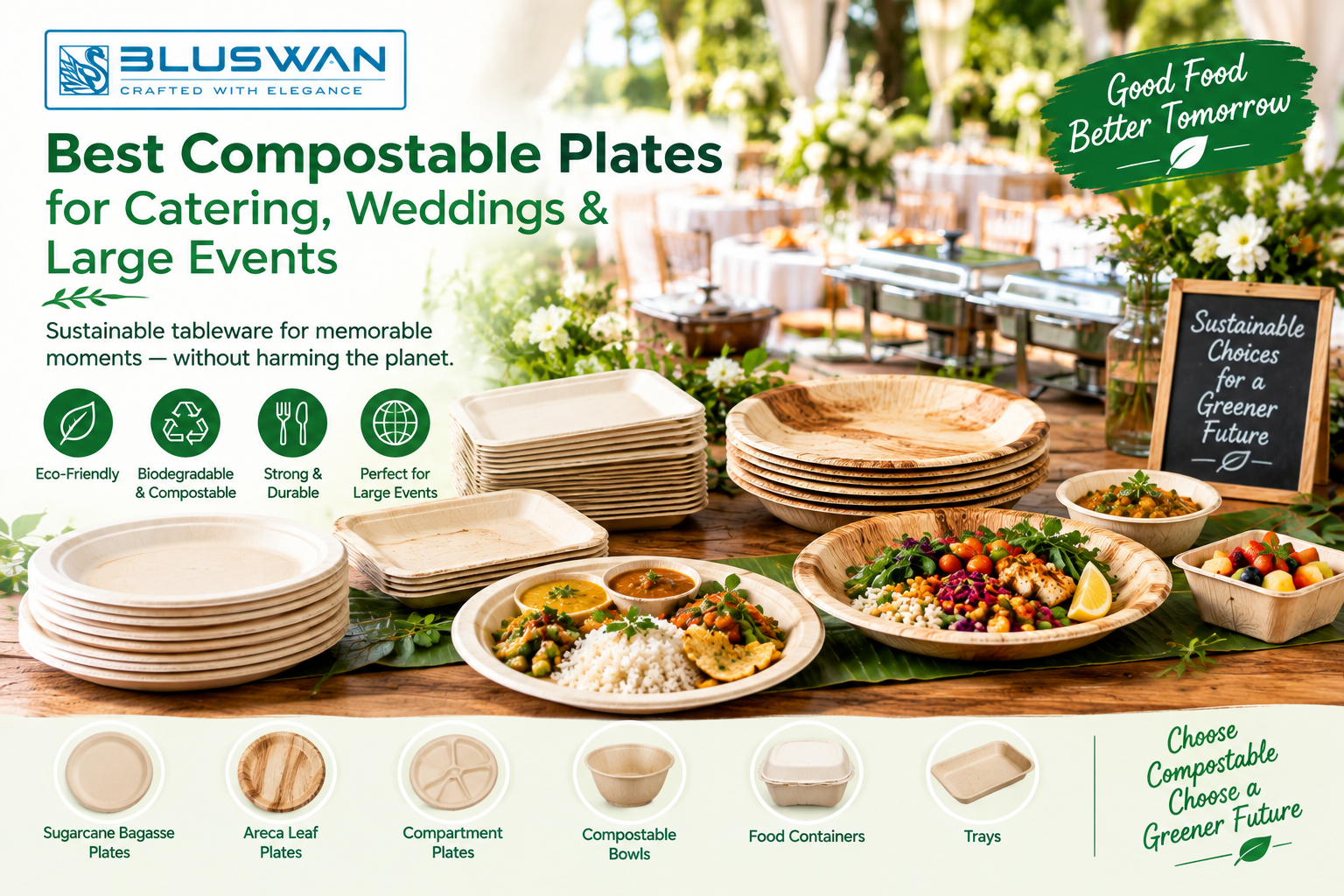
Large events create large amounts of food-service waste. Weddings, catering functions, corporate events, festivals, parties, exhibitions, and outdoor gatherings can serve hundreds or even thousands of guests in a single day. Choosing the right tableware is therefore an important part of event planning.
Traditional disposable plastic plates have been widely used because they are lightweight, affordable, and convenient. However, growing concerns about plastic waste have encouraged event organizers and catering businesses to explore alternatives.
Compostable plates are one option gaining attention among caterers, restaurants, event planners, and businesses looking for more sustainable disposable tableware.
Compostable plates can be made from materials such as sugarcane bagasse, areca leaf, and other plant-based or fibre-based materials. Depending on the material and applicable certification, compostable products are designed to break down under specific composting conditions.
For large events, the ideal plate needs to offer more than environmental benefits. It should be strong, suitable for the food being served, easy to transport, convenient for guests, and practical to dispose of after the event.
In this guide, we explore different types of compostable plates for catering, weddings, and large events, their benefits, applications, and what event organizers should consider before purchasing.
Compostable plates are disposable plates designed to break down into compostable material under specified composting conditions.
They are commonly made from renewable or plant-based materials, including:
It is important to understand that compostable does not simply mean that a product will disappear anywhere in nature. Many compostable products require particular temperature, moisture, microbial activity, and processing conditions to break down properly.
Therefore, event organizers should check the product's certification and disposal instructions before making compostability claims.
Large events have unique tableware requirements.
A small family gathering may need 20 or 30 plates, while a wedding or corporate event may require hundreds or thousands.
Reusable plates can create additional requirements for:
Disposable compostable plates can provide an alternative where reusable tableware is not practical.
They can be particularly useful for:
The right choice depends on the event's food menu, guest count, budget, venue facilities, and waste-management system.
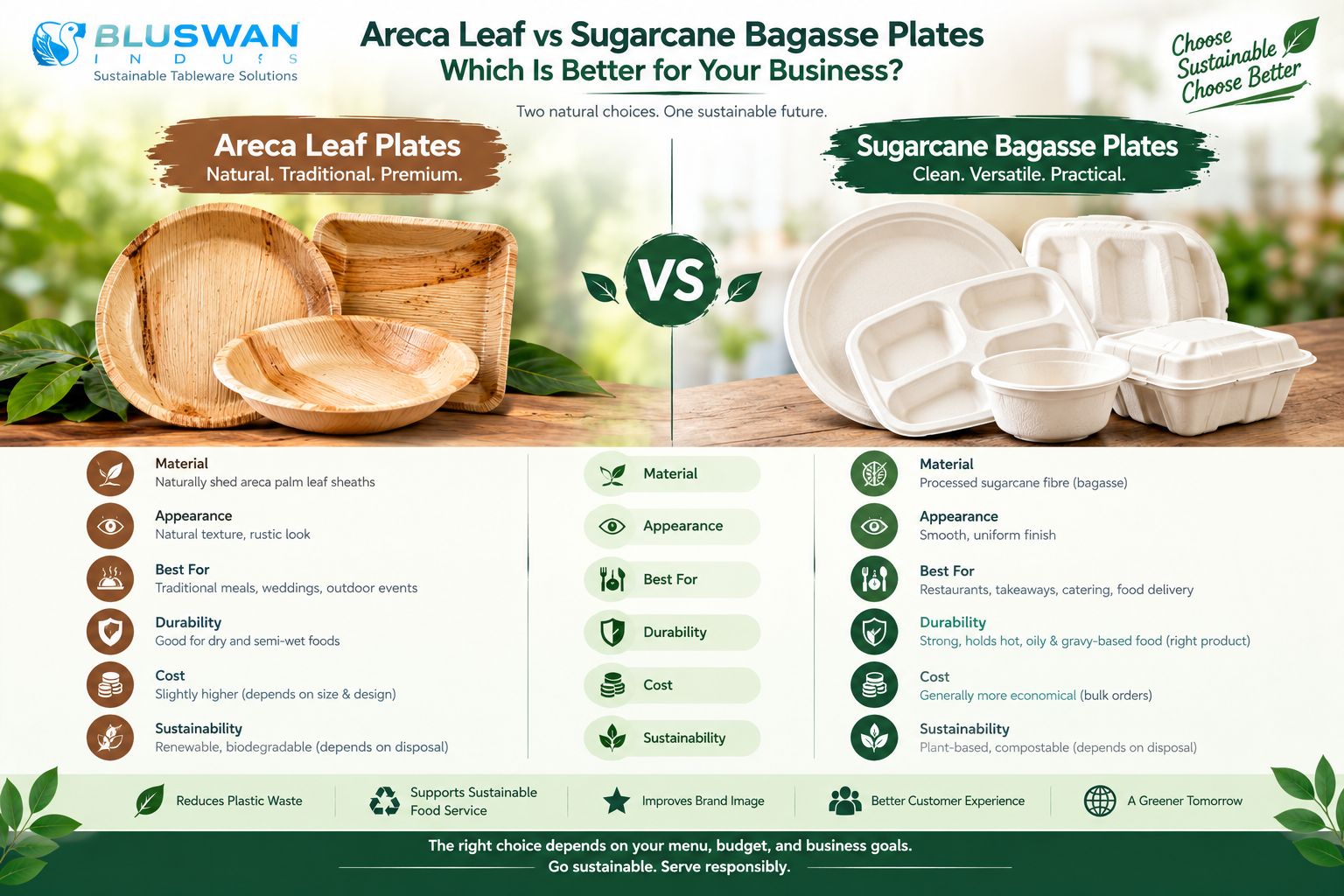
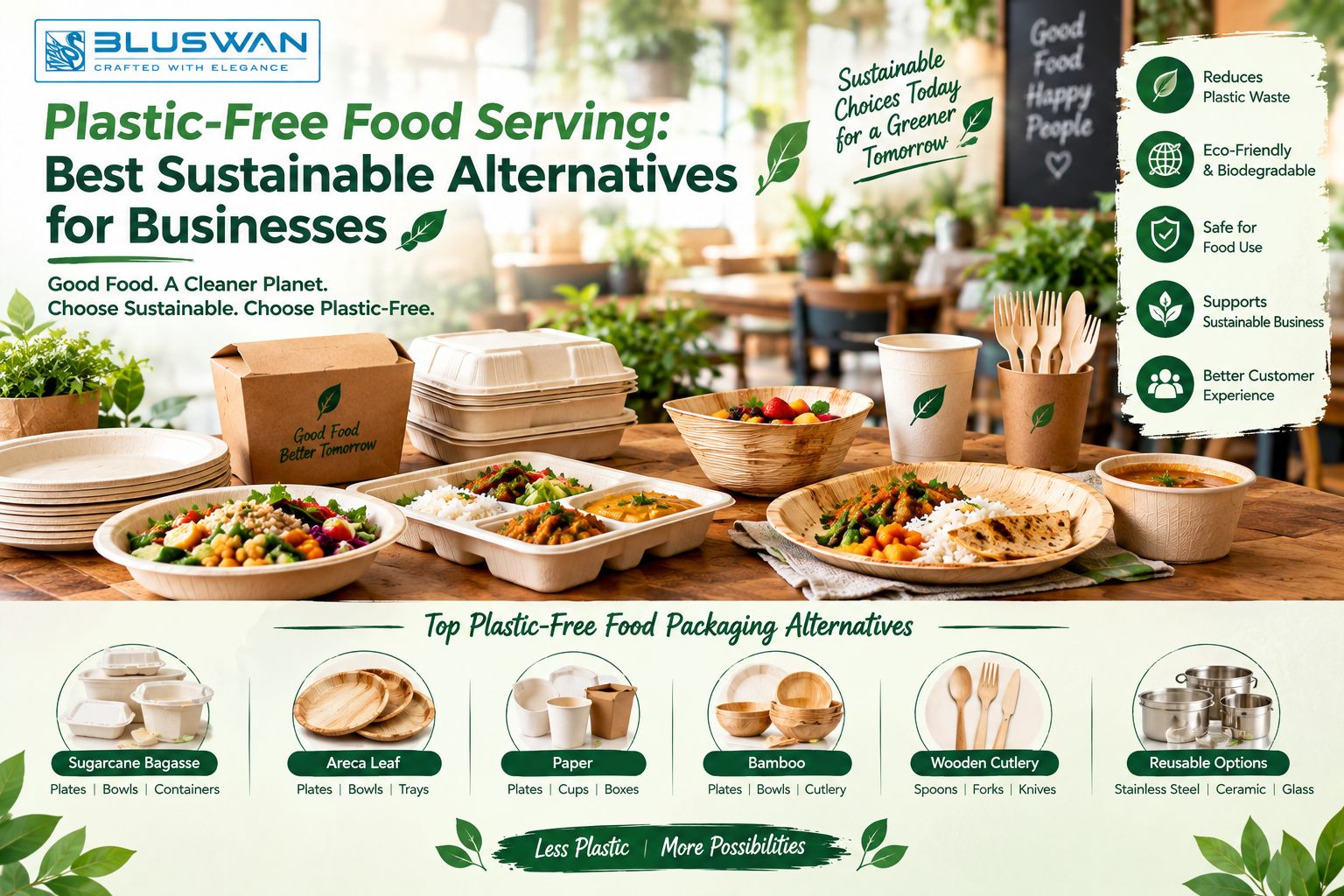
Sugarcane bagasse is one of the most popular plant-fibre materials used for disposable food-service products.
Bagasse is the fibrous residue left after extracting juice from sugarcane. This material can be processed into plates, bowls, trays, and other food-service products.
Bagasse plates are available in different shapes and sizes, making them suitable for various menus.
They can be used for:
Their natural fibre appearance can also give catering setups a clean and modern look.
For large events, stackable plate designs can make transportation and storage easier.
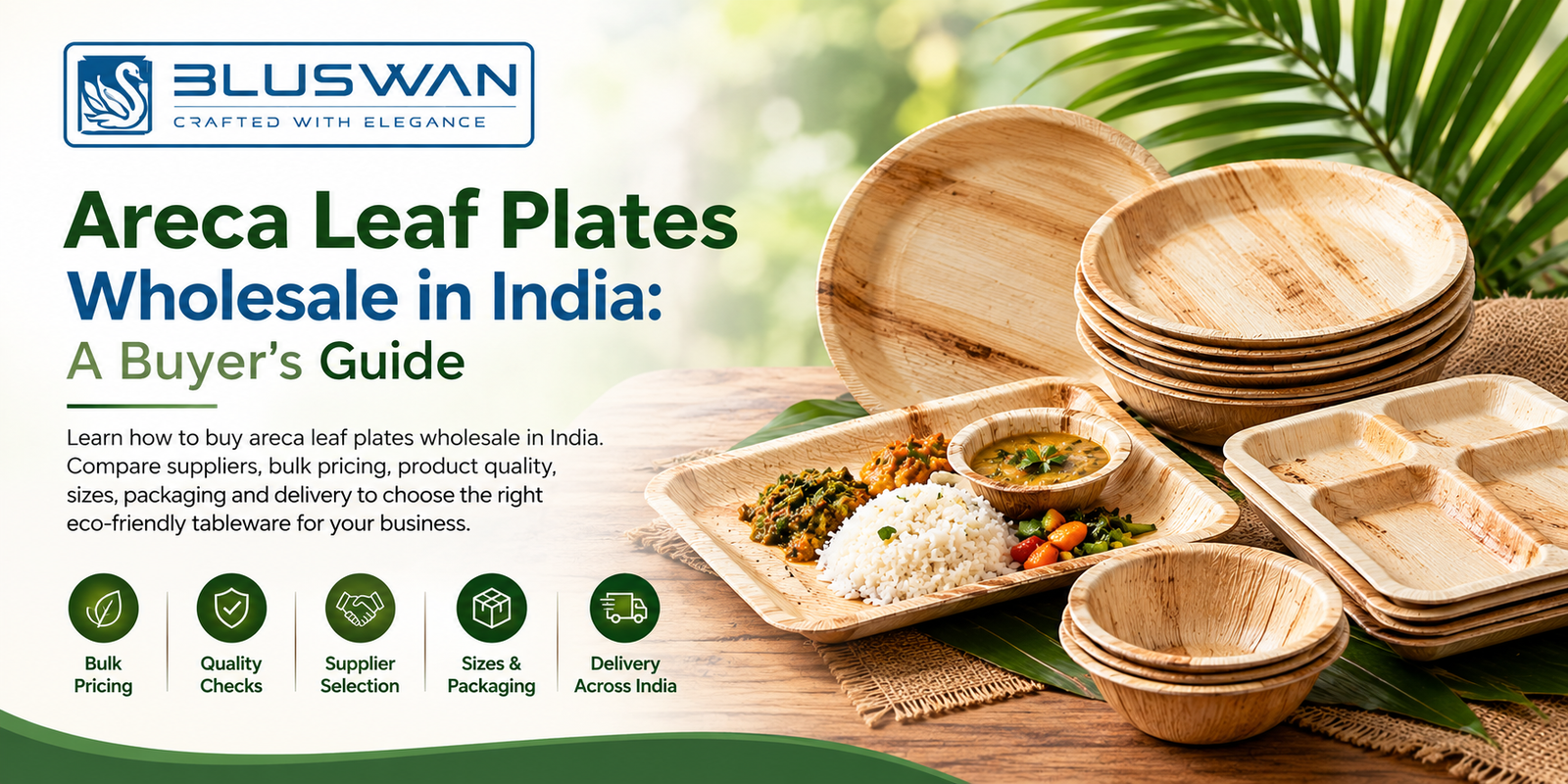
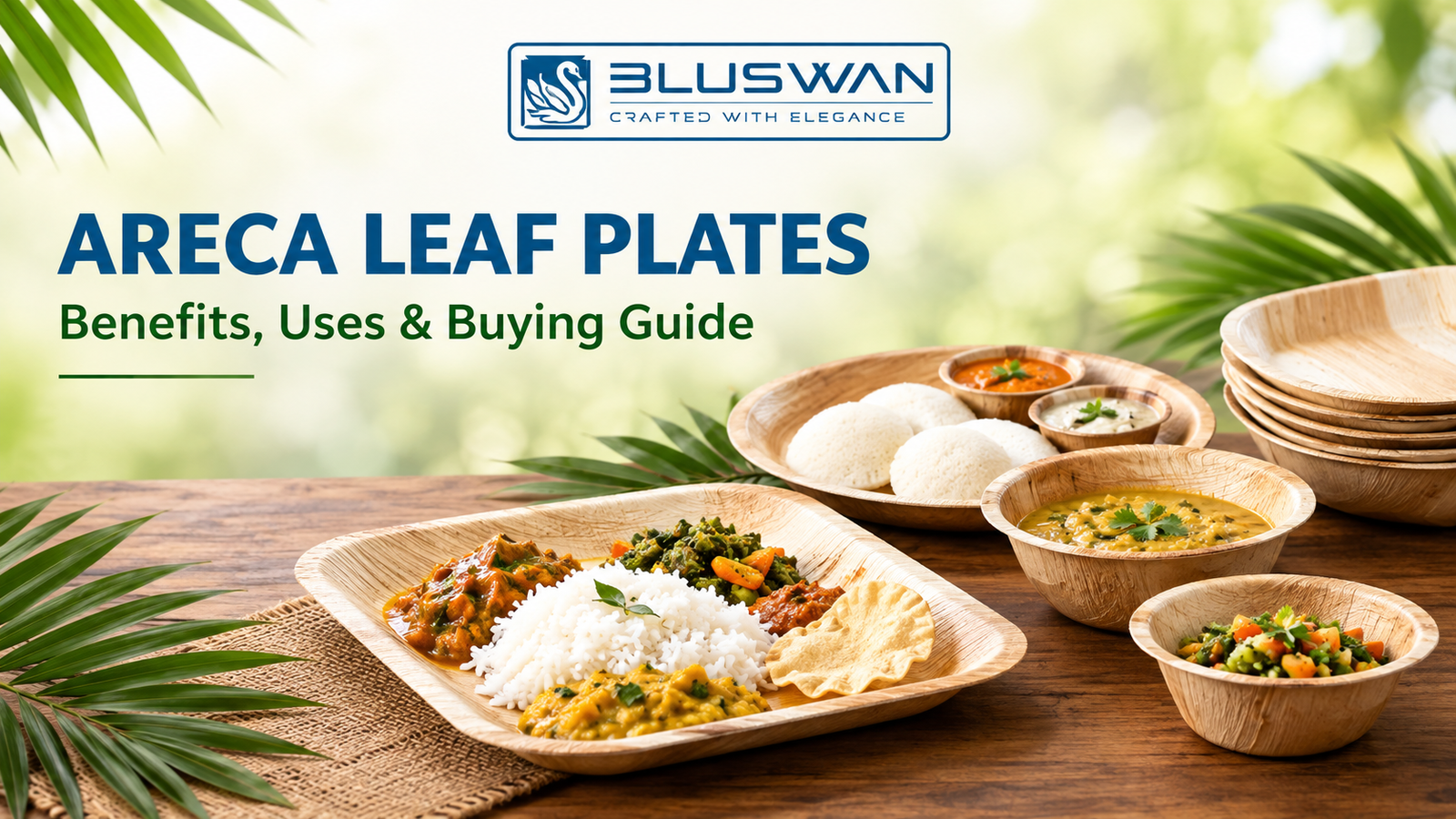
Areca leaf plates are made from naturally shed areca palm leaf sheaths.
The fallen leaf sheaths can be collected, cleaned, dried, and processed into plates and bowls.
Their natural appearance makes them especially popular for events where organizers want a rustic or nature-inspired presentation.
Areca leaf plates can be suitable for:
They can also complement traditional Indian food presentation because of their earthy appearance.
For weddings, event planners should choose the appropriate plate size based on the menu and serving style.
Large events often serve several dishes together.
A compartment plate can separate different food items without requiring multiple plates.
For example, one plate can include separate sections for:
This can be especially useful for:
Compartment plates can also help simplify distribution because guests can receive one plate instead of several separate dishes.
Round plates remain a practical choice for many catering applications.
They are suitable for both formal and casual events and can be used for a wide range of food items.
Round compostable plates can be selected in different sizes according to portion requirements.
Suitable for:
Suitable for:
Suitable for:
Selecting the correct size helps avoid unnecessary waste and provides guests with enough space for their food.
Although plates are the main focus of event tableware, bowls can also be important.
Many catering menus include foods that are better served in deeper containers.
Compostable bowls can be used for:
Using plates and bowls from compatible materials can also create a consistent table setting.
Indian weddings often involve large-scale food service.
A single wedding can include several food counters, buffet stations, snacks, desserts, beverages, and multiple meals.
This means tableware planning needs to be done carefully.
For a wedding, organizers should estimate:
Number of guests × meals/serving occasions × additional plates required
It is also sensible to keep a reasonable additional quantity for unexpected guests, damaged products, or changes in the serving plan.
If an event has 500 guests and requires one main meal plate per guest, purchasing exactly 500 plates may not provide enough flexibility.
The caterer can plan additional stock based on the event's serving arrangements and expected usage.
Outdoor events can present different challenges compared with indoor functions.
There may be limited access to:
Disposable compostable tableware can be convenient in such situations.
Examples include:
However, organizers should plan waste collection in advance. Simply using compostable products does not automatically guarantee that they will be composted after the event.
When purchasing compostable plates, environmental claims should not be the only consideration.
Here are several important factors.
The plate should be strong enough to hold the food being served.
For a heavy meal containing rice, curry, vegetables, and meat, a lightweight plate that bends easily may not be appropriate.
Choose plate sizes according to the menu.
Large meals require more space, while desserts and snacks may require smaller plates.
Consider whether the plate is suitable for:
Always follow the supplier's product specifications.
If a product is marketed as compostable, ask the supplier for relevant certifications and documentation.
This helps businesses distinguish verified product claims from general marketing language.
Large events may require hundreds or thousands of plates.
Choose products that can be stacked and stored efficiently without damage or contamination.
Catering companies often move tableware from warehouses to venues.
Lightweight, stackable products can make transportation and handling easier.
The choice between conventional plastic and compostable tableware involves several factors.
| Feature | Compostable Plates | Conventional Plastic Plates |
|---|---|---|
| Material options | Plant fibres and other compostable materials | Conventional plastics |
| Appearance | Natural/fibre-based options available | Plastic appearance |
| Event use | Catering, weddings, parties, events | General disposable use |
| End-of-life | Depends on material and composting facilities | Often requires conventional waste management |
| Storage | Usually stackable | Usually stackable |
| Food suitability | Depends on product specification | Depends on product specification |
| Environmental claims | Should be verified | Depends on material and recycling system |
There is no single product that is perfect for every event.
The most appropriate choice depends on the food, venue, budget, local waste system, and product specifications.
Quantity planning is one of the most important parts of event preparation.
Start with:
Determine the expected number of attendees.
Will guests eat:
A main meal may require a large plate, while snacks may require a smaller plate.
Allow for:
A catering supplier can also help estimate quantities based on the event menu.
Tableware contributes to the overall appearance of a catering setup.
Natural-fibre plates can complement:
For wedding planners and event organizers, this can create a consistent visual theme from food presentation to décor.
Natural tableware can be particularly suitable for events where sustainability is part of the overall theme.
One of the biggest mistakes businesses can make is assuming that a compostable plate automatically becomes compost after disposal.
The actual end-of-life outcome depends on:
For a large event, organizers should create a simple waste-management plan.
For example:
Food Waste → Compostable Tableware → Other Waste → Separate Collection
Clearly labelled waste bins can help guests and staff dispose of materials correctly.
If composting facilities are available, collected compostable products can potentially be directed to the appropriate system according to local requirements.
Catering companies operate at scale.
They regularly manage large quantities of food, packaging, and disposable tableware.
For them, compostable products can become part of a broader sustainability strategy.
Potential applications include:
The key is selecting products that work operationally rather than choosing a product based only on its environmental label.
Bluswan Indus offers a range of eco-friendly disposable tableware products designed for food-service and event applications.
Its product range includes options such as:
These options can be considered by restaurants, caterers, event planners, wedding organizers, and businesses looking for alternatives to conventional disposable tableware.
For large events, selecting the right combination of plate sizes, bowls, and serving products can help caterers organize food service according to the menu and guest requirements.
Before placing a bulk order, consider these practical tips:
Choose tableware according to the type of food being served.
Estimate the number of plates required for each meal and serving occasion.
Test the plate with actual food before making a large purchase.
Review size, strength, temperature suitability, and food-contact information.
Verify compostability claims with appropriate documentation.
Know where used plates will go after the event.
Make sure your venue has sufficient clean and dry storage space.
A dependable supplier can help with product selection, bulk quantities, and event-specific requirements.
The demand for convenient food-service products is unlikely to disappear. Catering, weddings, festivals, corporate events, and outdoor gatherings will continue to need practical tableware.
The opportunity is to make better-informed choices about the materials used.
Compostable plates can be one part of a broader approach to responsible event planning.
The future of event tableware is not only about replacing plastic. It is about choosing products that balance:
Functionality + Food Safety + Convenience + Cost + Responsible Disposal
When these factors are considered together, event organizers can create a more practical and responsible food-service system.
Choosing tableware for a large event requires careful planning.
From sugarcane bagasse plates and areca leaf plates to compartment plates, round plates, and compostable bowls, there are several options available for catering businesses and event organizers.
The right choice depends on the menu, guest count, event type, budget, storage requirements, food-contact suitability, certifications, and local disposal facilities.
For weddings, catering functions, corporate events, festivals, and large gatherings, compostable plates can provide a convenient alternative to conventional disposable tableware when the products and end-of-life system are appropriate.
The most important step is to look beyond the word "compostable" and understand the complete product journey—from material and manufacturing to use and disposal.
Plan your event. Choose the right tableware. Serve your guests responsibly.
Are compostable plates good for weddings?
They can be suitable for weddings, particularly large or outdoor events where disposable tableware is needed. The plate should be selected according to the food menu and serving requirements.
What are compostable plates made from?
They can be made from materials such as sugarcane bagasse, areca leaf, paper fibres, agricultural by-products, and other certified compostable materials.
Are bagasse plates suitable for catering?
Bagasse plates are commonly used for catering and food-service applications. The appropriate product should be selected based on food type, size, strength, and supplier specifications.
Are areca leaf plates suitable for weddings?
Areca leaf plates can be used for weddings, catering, outdoor events, and traditional food-service applications. Their natural appearance can also complement rustic and nature-inspired event themes.
How should compostable plates be disposed of?
Disposal depends on the specific product and local waste-management infrastructure. Check the manufacturer's instructions and applicable composting requirements.
How do I choose the right plate size for a large event?
Consider the menu and portion size. Smaller plates can work for snacks and desserts, while larger plates are generally more appropriate for full meals and buffet servings.
2026 © All rights reserved by Bluswan indus Pvt Ltd
Powered by : Innoplus TechnologiesYour item has already added in wishlist successfully


