Welcome to our Organic store Bluswan Indus Pvt Ltd! | +91 9346545670 (Main Office) | +91 7794920404 (Machines)
Welcome to our Organic store Bluswan Indus Pvt Ltd! | +91 9346545670 (Main Office) | +91 7794920404 (Machines)
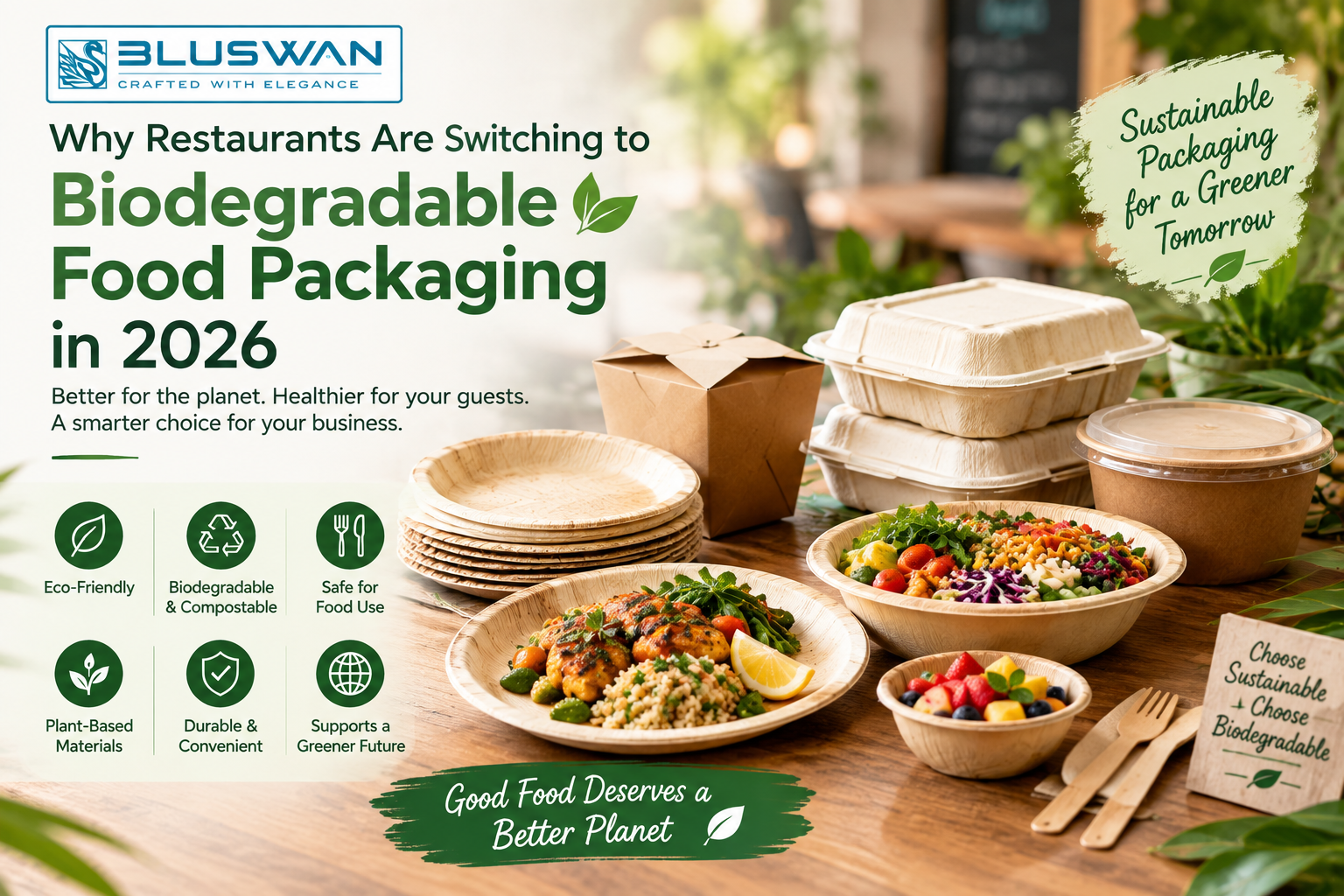
The food-service industry is changing rapidly. Restaurants, cafés, cloud kitchens, caterers, food trucks, takeaway counters, and delivery businesses are paying more attention to the packaging they use every day.
For years, plastic containers, plates, cups, trays, and other disposable products were convenient and inexpensive. But increasing concerns about plastic waste, changing regulations, customer expectations, and the demand for more responsible business practices are encouraging food businesses to explore alternatives.
One option gaining attention is biodegradable food packaging.
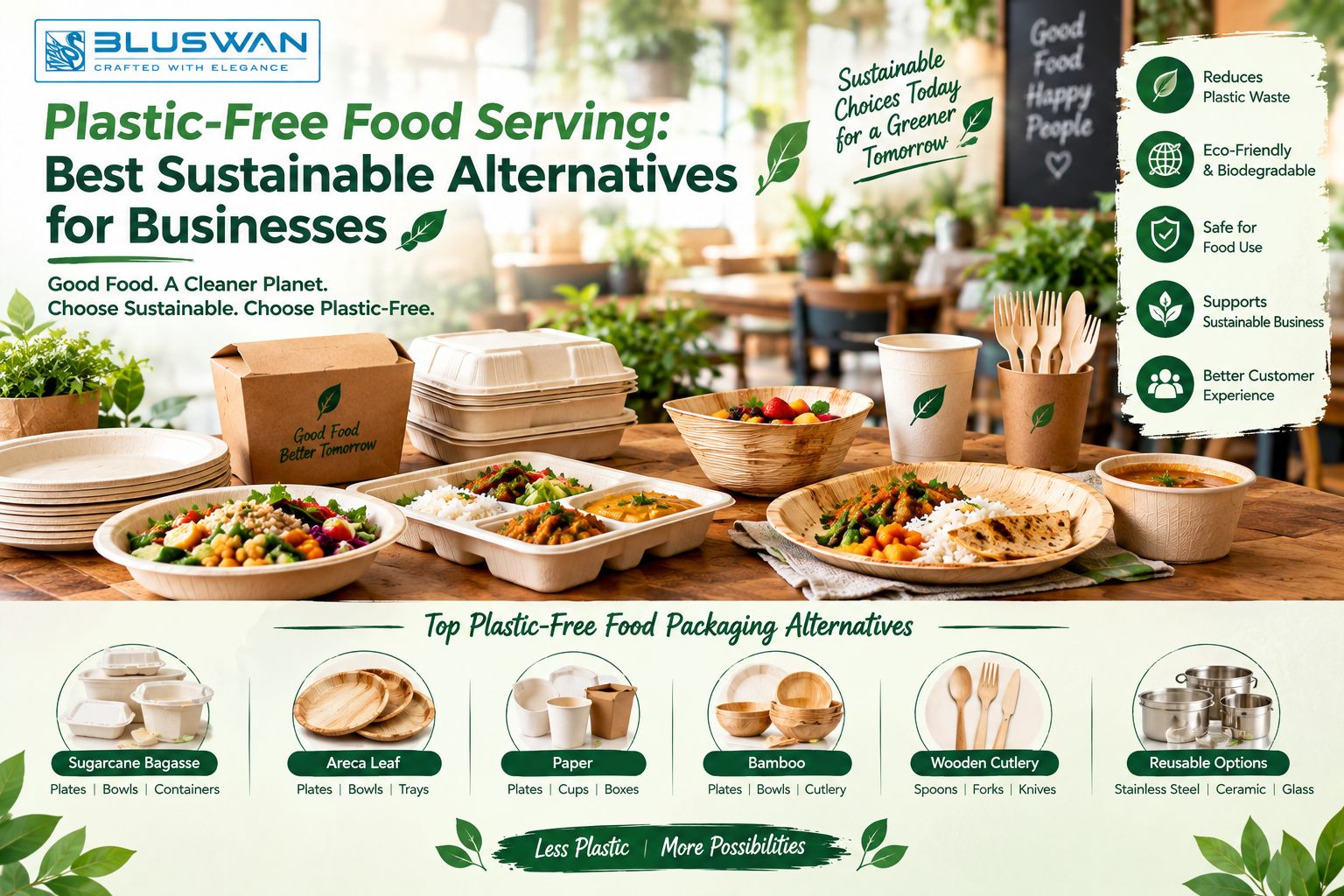
Biodegradable packaging can be made from plant-based or other materials designed to have a lower environmental impact than conventional single-use plastics. Depending on the material and disposal system, options can include sugarcane bagasse, areca leaf, rice bran and other plant-based materials.
For restaurants, the goal is not simply to replace one disposable product with another. The right packaging should also be practical, food-safe, durable, affordable, and suitable for the restaurant's actual waste-management system.
So, why are restaurants increasingly considering biodegradable food packaging in 2026? Let's explore.
Biodegradable food packaging refers to food containers, plates, bowls, trays, and related products made from materials that can break down through natural biological processes under appropriate conditions.
Traditional plastic can persist in the environment for a very long time. This has made plastic pollution a major environmental concern. The United Nations Environment Programme has noted that the persistence of plastics in the environment creates long-term impacts and that alternatives to single-use packaging need to be assessed carefully across their life cycle.
Biodegradable and compostable packaging can be made using materials such as:
The exact environmental benefit depends on the material, manufacturing process, certification, and what happens after the product is used.
There are several reasons restaurants are looking more closely at sustainable packaging.
Restaurants can use hundreds or even thousands of disposable packaging items every month.
Consider a typical takeaway order:
Multiply this by hundreds of orders and the amount of disposable material can become significant.
Reducing dependence on conventional single-use plastics can therefore become an important part of a restaurant's waste-reduction strategy.
In India, several identified single-use plastic items have been prohibited since July 1, 2022, including plastic plates, cups, glasses, cutlery, straws and trays. The Central Pollution Control Board continues to publish compliance guidance relating to the single-use plastic restrictions.
This regulatory environment has made material selection an important consideration for food businesses.
Food quality is no longer the only part of the customer experience.
When customers order food online or take food home, they also see the packaging.
A restaurant may offer excellent food, but excessive plastic packaging can create a different impression for customers who are trying to reduce waste.
On the other hand, using natural-looking plates, bowls, boxes, or containers can communicate that the business is thinking about responsible consumption.
This does not mean customers automatically prefer every biodegradable product. Packaging still needs to be convenient, strong, hygienic, and appropriate for the food being served.
The important point is that packaging has become part of the overall food-service experience.
One of the biggest attractions of biodegradable food packaging is the availability of plant-based materials.
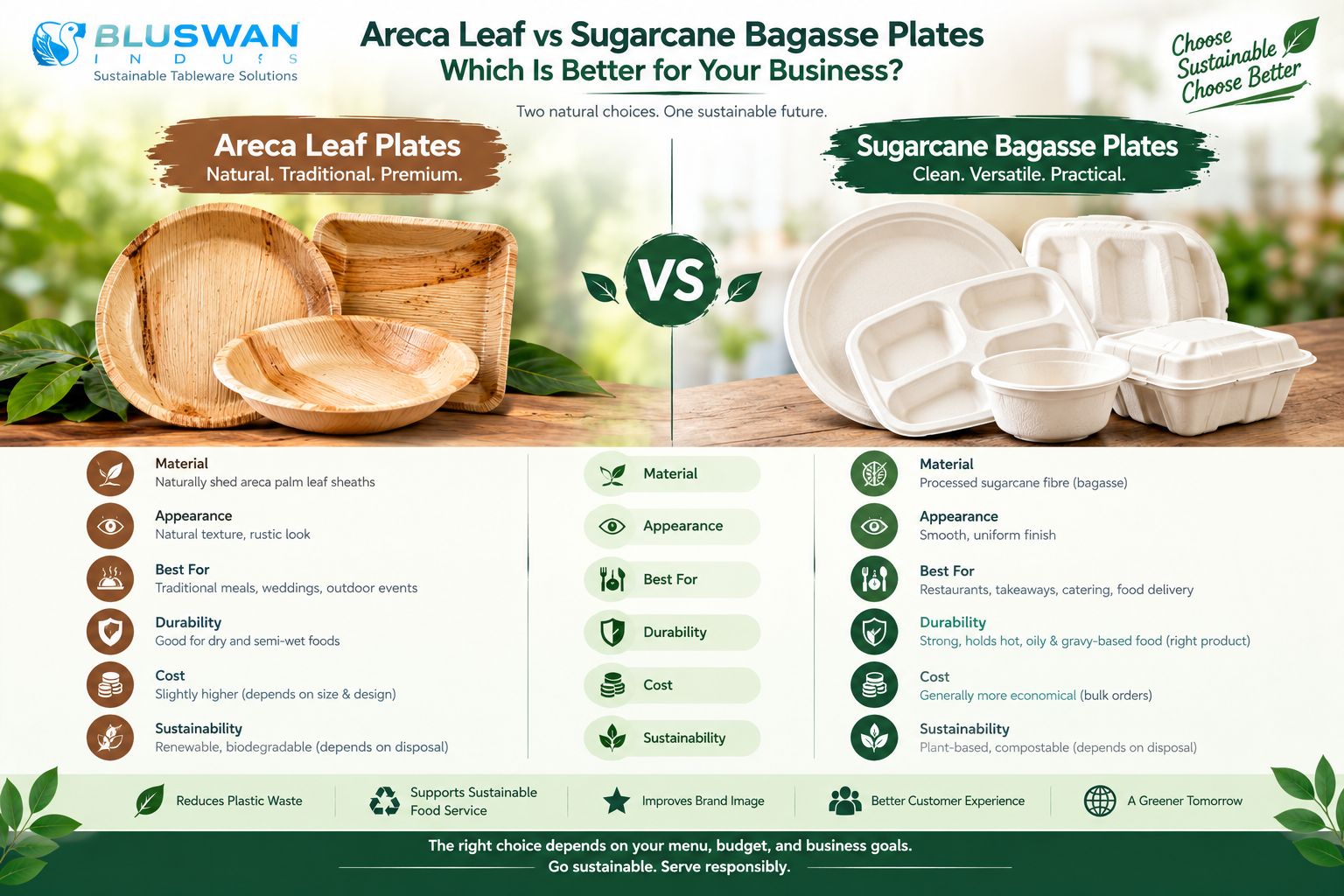
Sugarcane bagasse is the fibrous material left after sugarcane juice extraction. It can be processed into disposable plates, bowls, trays, and food containers.
For example, Bluswan Indus offers sugarcane bagasse plates in different sizes and designs for food-service applications.
Bagasse products can be useful for:
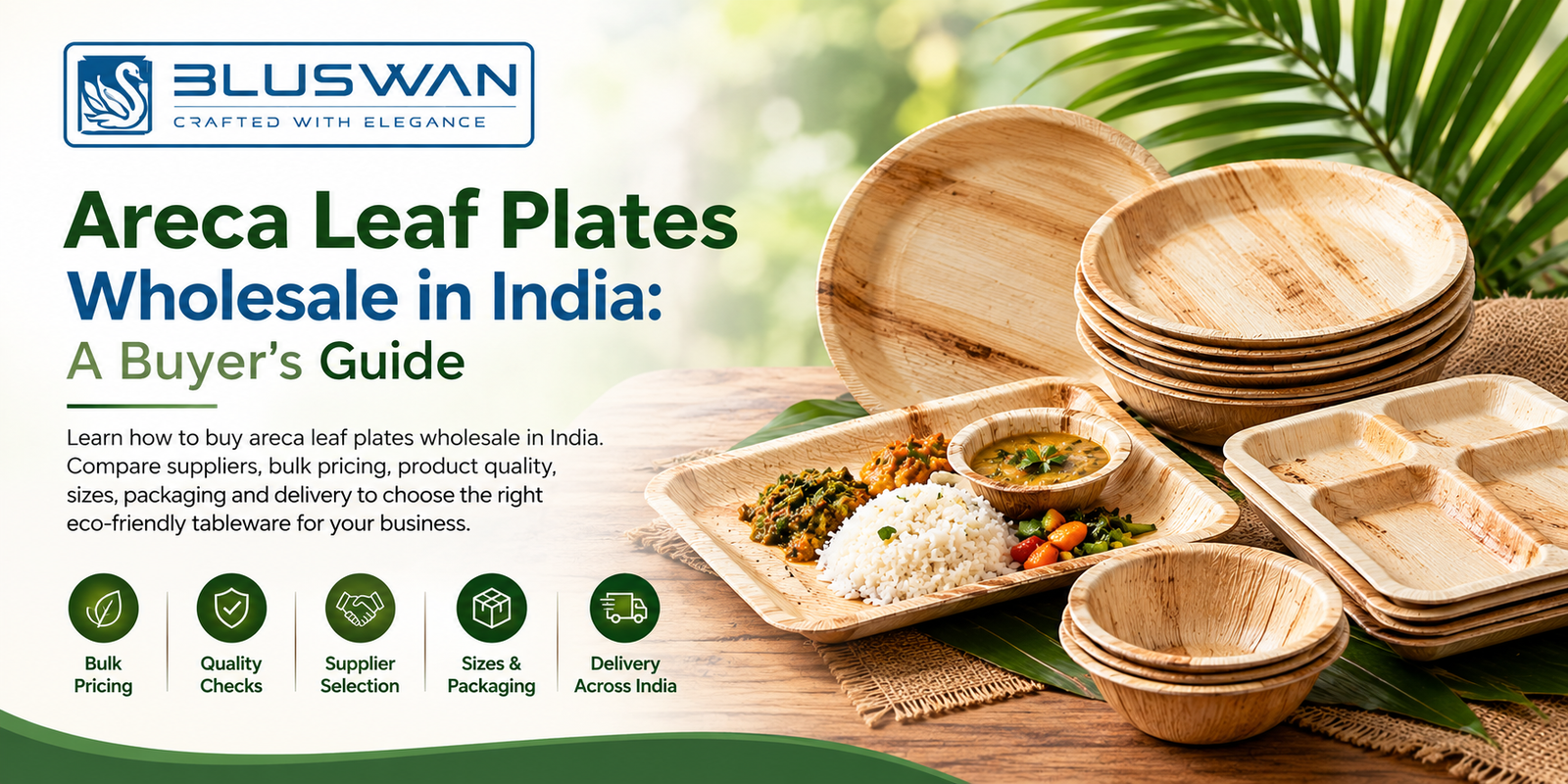
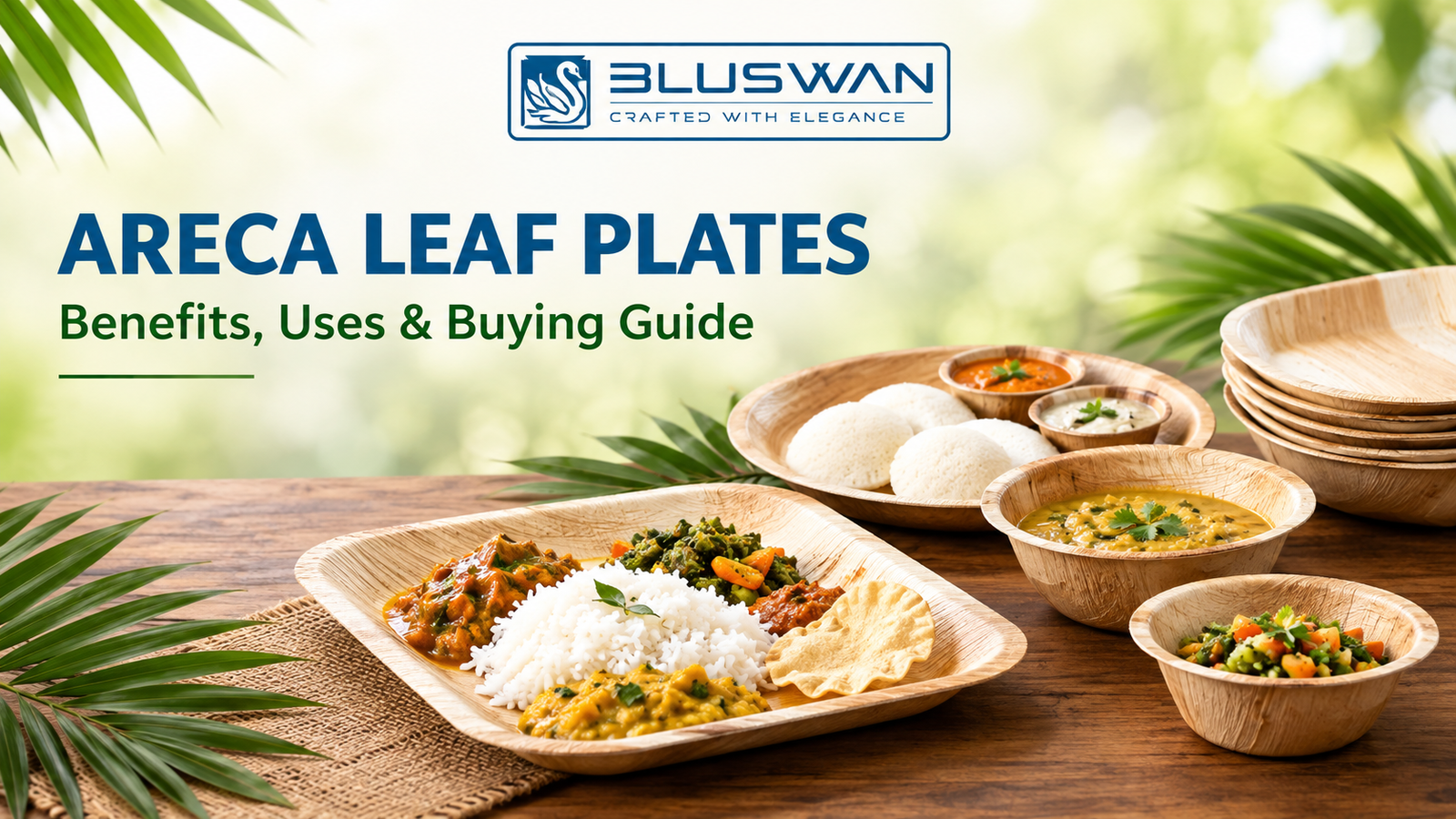
Areca leaf products are made from naturally shed areca palm leaf sheaths. They are commonly used to make plates and bowls.
Bluswan Indus offers areca leaf plates and bowls in different sizes for restaurants, events, catering, and other food-service uses.
The natural texture of areca leaf products can also provide a distinctive presentation for food.
Agricultural by-products can also be used to create disposable food-service products.
Bluswan Indus, for example, lists rice bran plates made from agricultural by-products and positions them as an alternative to conventional disposable plates.
Using agricultural residues in products can support a more circular approach to material use, although the actual environmental performance depends on the complete production and disposal system.
Sustainability is important, but restaurants cannot compromise on functionality.
Indian food, for example, can include:
Packaging therefore needs to handle different temperatures, moisture levels, oils, and serving conditions.
A packaging product that looks environmentally friendly but becomes weak when exposed to hot or oily food may not be suitable for a restaurant.
This is why restaurants should evaluate:
The Food Safety and Standards Authority of India maintains regulations covering food packaging and food-contact materials. Its Packaging Regulations have also been amended over time, including amendments published in 2025 and 2026.
Packaging is not only about protection.
Presentation matters, particularly for restaurants selling premium meals, catering services, desserts, salads, snacks, and event food.
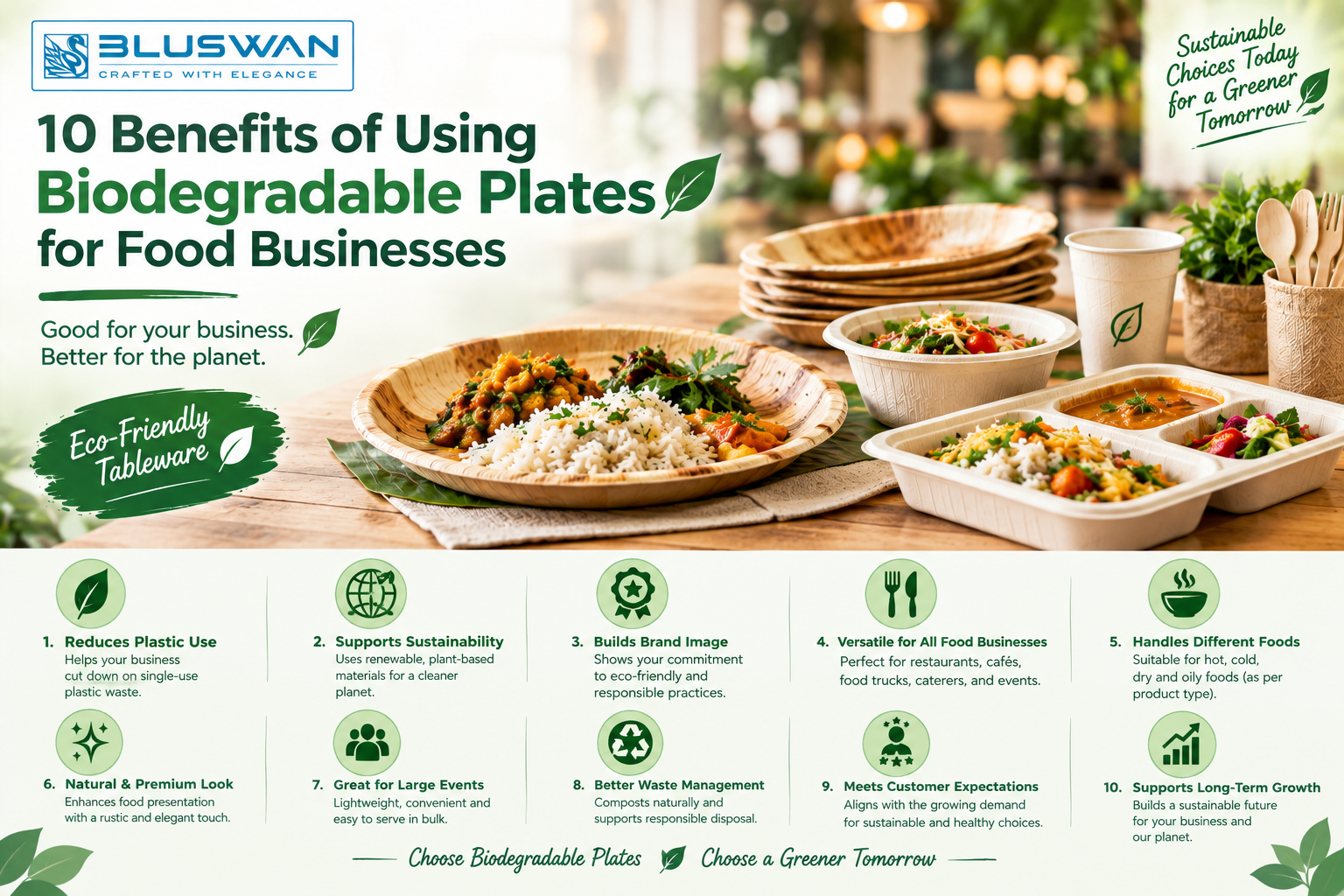
Natural materials such as areca leaf can create a rustic appearance, while well-designed bagasse products can provide a clean and modern presentation.
For restaurants, packaging can therefore support the visual identity of the food.
A well-presented meal can look more appealing in:
The packaging becomes part of the customer's experience from the moment the order arrives.
Many restaurants are working toward reducing waste and improving their sustainability practices.
Changing packaging is one area where a restaurant can make a visible operational change.
Instead of relying entirely on conventional plastic disposables, businesses can evaluate plant-based and certified compostable alternatives where appropriate.
However, sustainability should not stop at purchasing the product.
Restaurants should also think about:
Material → Use → Collection → Disposal
For example, a compostable product does not automatically become compost simply because it is labelled "compostable." The required composting conditions and local waste-management infrastructure matter.
This is why businesses should check product certifications, disposal instructions, and local waste-processing capabilities before making environmental claims.
One reason biodegradable packaging is attracting attention is its flexibility.
It is not limited to traditional restaurants.
Restaurants can use biodegradable plates, bowls, and takeaway packaging for dine-in events, takeaway orders, and special occasions.
Cloud kitchens depend heavily on takeaway and delivery packaging. Choosing appropriate sustainable alternatives can become part of their packaging strategy.
Catering companies can use disposable plates and bowls for large gatherings where washing and transporting reusable tableware may be difficult.
Food trucks need lightweight and convenient serving products. Plant-based disposable tableware can be considered for suitable menu items.
Large events can generate significant quantities of disposable waste. Sustainable tableware can be incorporated into an event's procurement plan.
Environmental regulations can change over time.
India's Plastic Waste Management framework has already introduced restrictions on identified single-use plastic products. The government maintains the relevant rules and amendments through the Ministry of Environment, Forest and Climate Change, while CPCB provides implementation and compliance information.
For restaurant owners, this creates an important lesson:
Do not wait until a packaging material becomes restricted before exploring alternatives.
Businesses can review their packaging inventory periodically and identify which products have suitable alternatives.
This can make future packaging changes easier to manage.
Not every biodegradable product is suitable for every restaurant.
Before purchasing, businesses should consider the following factors.
Understand what the product is made from.
Is it:
Packaging that comes into direct contact with food should meet applicable food-safety requirements.
Test the product with the actual food served by the restaurant.
A product designed for dry snacks may not be suitable for heavy gravy-based meals.
Choose packaging according to portion size and menu requirements.
If a supplier claims that a product is compostable or certified, ask for relevant documentation.
Find out how the packaging should be disposed of after use and whether appropriate waste-management facilities are available in the restaurant's area.
Plastic became popular because it is lightweight, inexpensive, durable, and convenient.
Replacing it is therefore not as simple as choosing any material labelled "eco-friendly."
Restaurants need packaging that balances:
Performance + Food Safety + Cost + Convenience + Environmental Considerations
Biodegradable food packaging can provide one pathway for businesses looking to reduce reliance on conventional single-use plastics.
But responsible packaging decisions should be based on the complete life cycle of the product rather than marketing claims alone. UNEP's work on alternatives to single-use packaging emphasizes life-cycle assessment as a way to compare environmental impacts across the value chain.
Bluswan Indus focuses on biodegradable and eco-friendly products for businesses looking for alternatives to conventional disposable products.
Its current product range includes:
The company describes its offering as biodegradable packaging, compostable tableware, and eco-friendly products for businesses and other applications.
Its product catalogue includes different plate sizes and formats, allowing businesses to select products according to serving requirements.
For restaurants and catering businesses, having multiple material and size options can make it easier to test different packaging solutions based on their menu and operational needs.
The restaurant industry is unlikely to stop needing disposable packaging completely.
Takeaway, food delivery, outdoor catering, events, and quick-service restaurants all depend on convenient packaging.
The bigger change is likely to be what those products are made from and how they are managed after use.
In 2026, restaurant owners can look beyond simply asking:
"Is this packaging cheap?"
They can also ask:
These questions can help businesses make more informed packaging decisions.
The move toward biodegradable food packaging is connected to several factors: concerns about plastic waste, regulatory changes, customer expectations, product innovation, and the search for practical alternatives.
Materials such as sugarcane bagasse, areca leaf, and agricultural by-products provide restaurants with different options to explore.
However, the most sustainable choice is not simply the product with the greenest label. Restaurants should consider the material, manufacturing process, food safety, durability, certifications, transportation, usage, and end-of-life disposal.
For restaurants, caterers, cloud kitchens, food trucks, and event businesses, 2026 is a useful time to review packaging choices and identify where biodegradable or compostable alternatives can fit into their operations.
Choose packaging based on performance, safety, verified environmental claims, and practical disposal — and build a food-service system that works for both your customers and your business.
1. What is biodegradable food packaging?
Biodegradable food packaging is packaging made from materials designed to break down through biological processes under suitable environmental conditions.
2. Is bagasse suitable for restaurants?
Sugarcane bagasse can be used for plates, bowls, trays, and other food-service products. Specific suitability depends on the product design and the food being served.
3. Are areca leaf plates biodegradable?
Areca leaf plates are made from naturally shed areca palm leaf sheaths and are commonly used as biodegradable tableware. Product specifications and disposal conditions should still be checked with the supplier.
4. Is biodegradable packaging always compostable?
No. "Biodegradable" and "compostable" are not interchangeable terms. Businesses should check the specific product's certifications and disposal requirements.
5. Where can restaurants use biodegradable packaging?
Restaurants can consider it for takeaway, catering, events, food delivery, parties, food trucks, and other suitable food-service applications.
6. What should restaurants check before buying biodegradable packaging?
Restaurants should check material, food-contact suitability, strength, size, certifications, temperature performance, cost, storage, and available disposal infrastructure.
2026 © All rights reserved by Bluswan indus Pvt Ltd
Powered by : Innoplus TechnologiesYour item has already added in wishlist successfully


