Welcome to our Organic store Bluswan Indus Pvt Ltd! | +91 9346545670 (Main Office) | +91 7794920404 (Machines)
Welcome to our Organic store Bluswan Indus Pvt Ltd! | +91 9346545670 (Main Office) | +91 7794920404 (Machines)
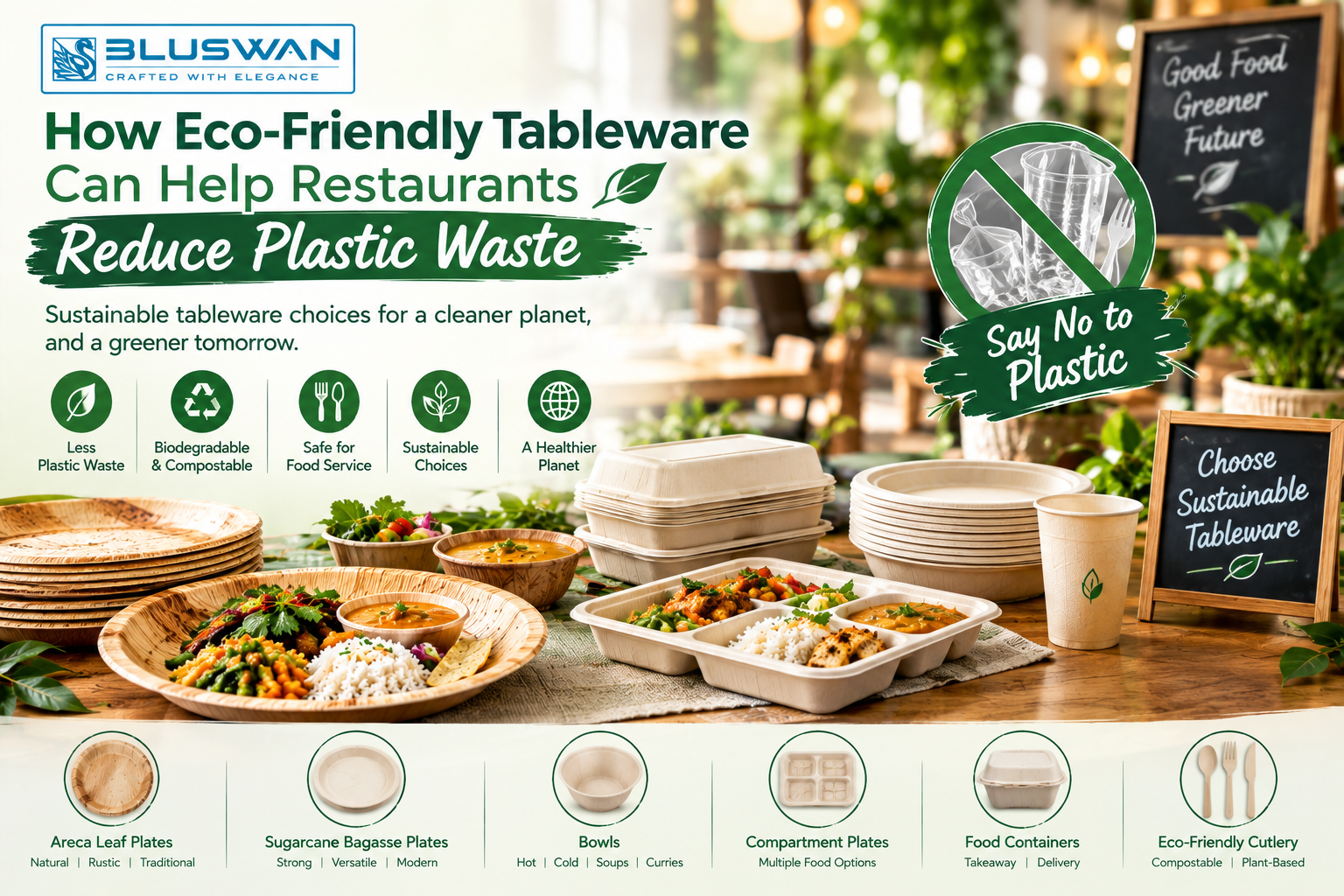
Restaurants serve food every day, and with every meal comes a packaging and tableware decision. From plates and bowls to takeaway containers, spoons, cups, and trays, food-service businesses can generate a large amount of disposable waste.
For many years, conventional plastic products were widely used because they were lightweight, convenient, and inexpensive. However, growing concerns about plastic pollution and changing regulations have encouraged restaurants to explore different materials.
One option is eco-friendly tableware.
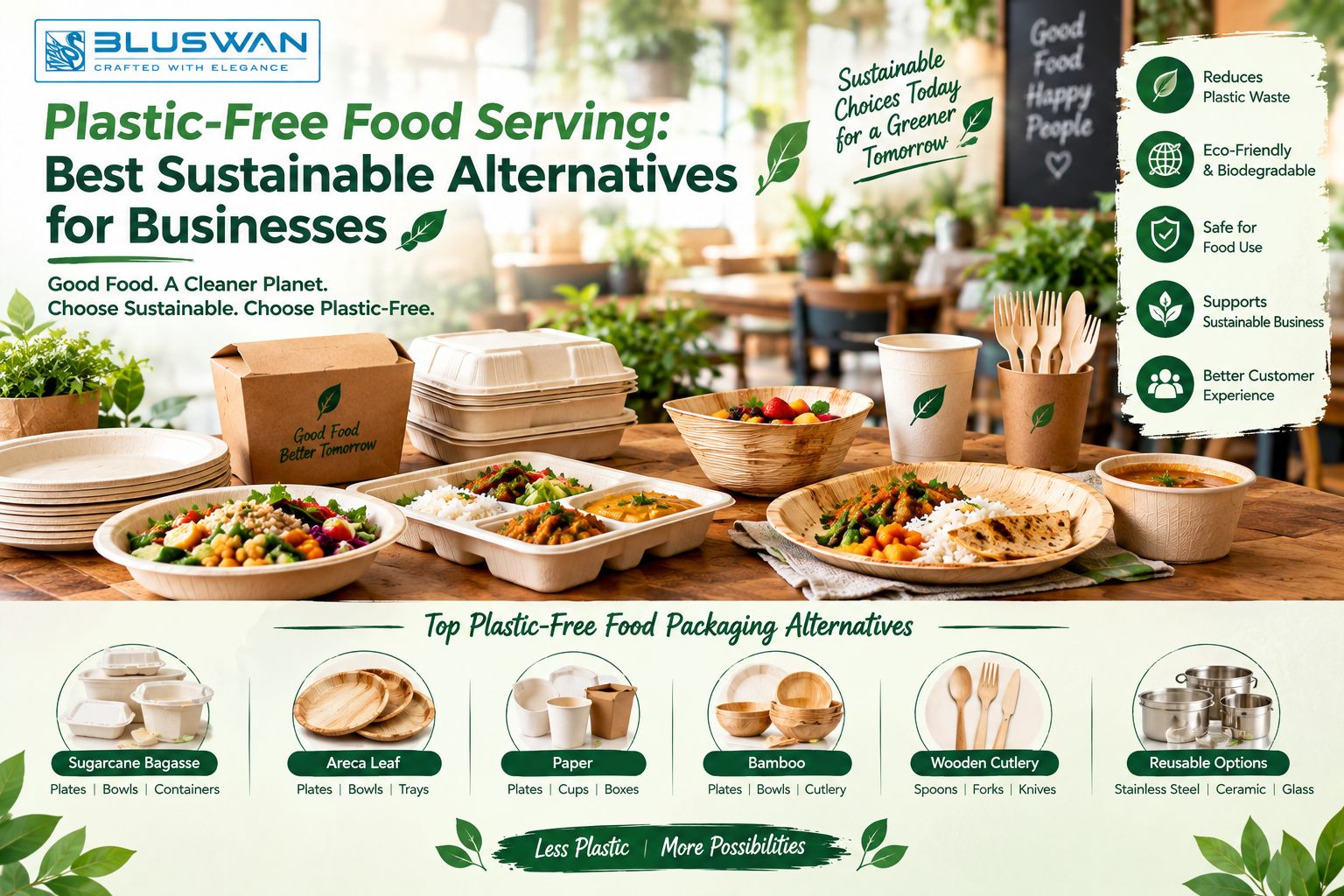
Eco-friendly tableware can include products made from plant-based fibres and other materials, such as sugarcane bagasse, areca leaf, rice bran, wheat bran, paper, and certified compostable materials. Depending on the product, these alternatives can help restaurants reduce their dependence on conventional single-use plastics.
In India, several identified single-use plastic items—including plastic plates, cups, glasses, cutlery, and trays—have been prohibited since July 1, 2022. The Central Pollution Control Board publishes guidance and information on the implementation of these restrictions.
But switching tableware is not simply about replacing plastic with another disposable product. Restaurants also need to consider food safety, durability, cost, customer experience, waste collection, and the actual end-of-life options available in their location.
Let's explore how eco-friendly tableware can help restaurants reduce plastic waste and how businesses can choose suitable products.
Eco-friendly tableware generally refers to plates, bowls, trays, containers, cups, and other food-service products designed with environmental considerations in mind.
Depending on the product, materials can include:
These materials are not identical. Their environmental performance depends on how they are sourced, manufactured, transported, used, collected, and disposed of.
For restaurants, the most useful approach is to choose products based on their actual application and verified product specifications, rather than relying only on terms such as "green," "natural," or "eco-friendly."
Plastic has played an important role in modern food service because it is lightweight, durable, and convenient. However, single-use plastic products can become a waste-management challenge when they are used in large quantities.
Think about a busy restaurant.
A single takeaway order might use:
Now multiply that by hundreds of orders every day.
The amount of disposable material can quickly become significant.
Reducing unnecessary plastic use can therefore be part of a restaurant's broader waste-reduction strategy.
One of the simplest ways a restaurant can change its waste profile is to review the disposable products it uses.
Instead of automatically purchasing conventional plastic plates and containers, businesses can investigate suitable alternatives.
For example:
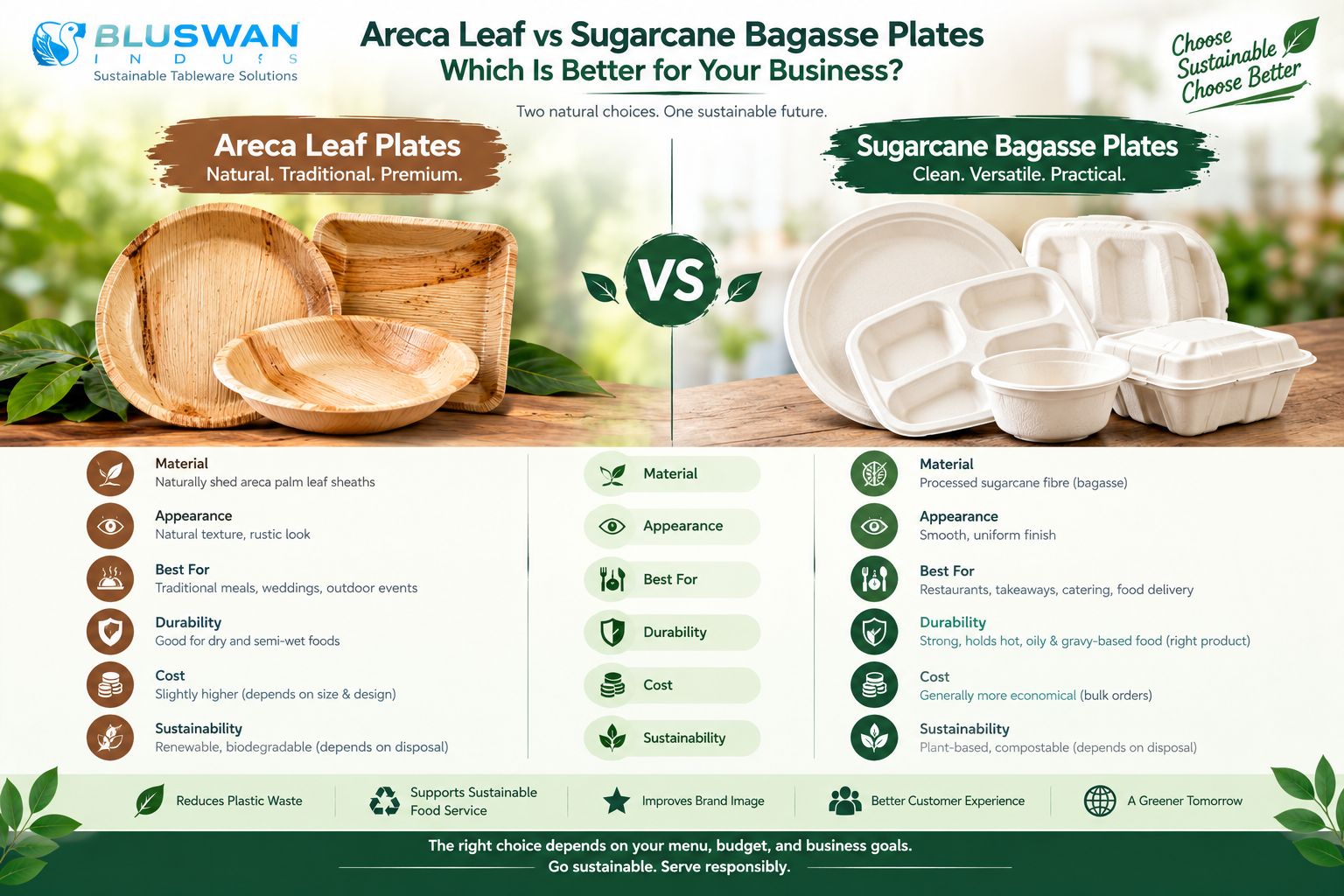
Bagasse is the fibrous residue left after sugarcane juice extraction. It can be processed into plates, bowls, trays, and food containers.
Areca leaf tableware is made from naturally shed areca palm leaf sheaths and can be shaped into plates and bowls.
Materials such as rice bran and wheat bran can also be used in certain disposable food-service products.
The right choice depends on the restaurant's menu and operational requirements.
Not every restaurant needs the same type of tableware.
A restaurant serving biryani may have different requirements from a café serving sandwiches.
Similarly, a dessert shop may need different products from a catering business.
Larger plates or compartment plates can be useful.
Deeper bowls or suitable food containers may be more practical.
Smaller plates can reduce unnecessary material use.
Food containers with appropriate lids are generally more suitable.
Choosing the right size and format can help businesses avoid using oversized packaging for smaller portions.
Sugarcane bagasse is one of the commonly used materials in sustainable food-service tableware.
The material comes from sugarcane fibre left after juice extraction.
It can be molded into:
For restaurants, bagasse can be useful because different product formats can accommodate different foods.
For example, a restaurant could use a larger plate for a complete meal and a smaller plate for snacks or desserts.
The important point is to select food-contact products that meet applicable requirements and are appropriate for their intended use.
Areca leaf plates offer a different approach.
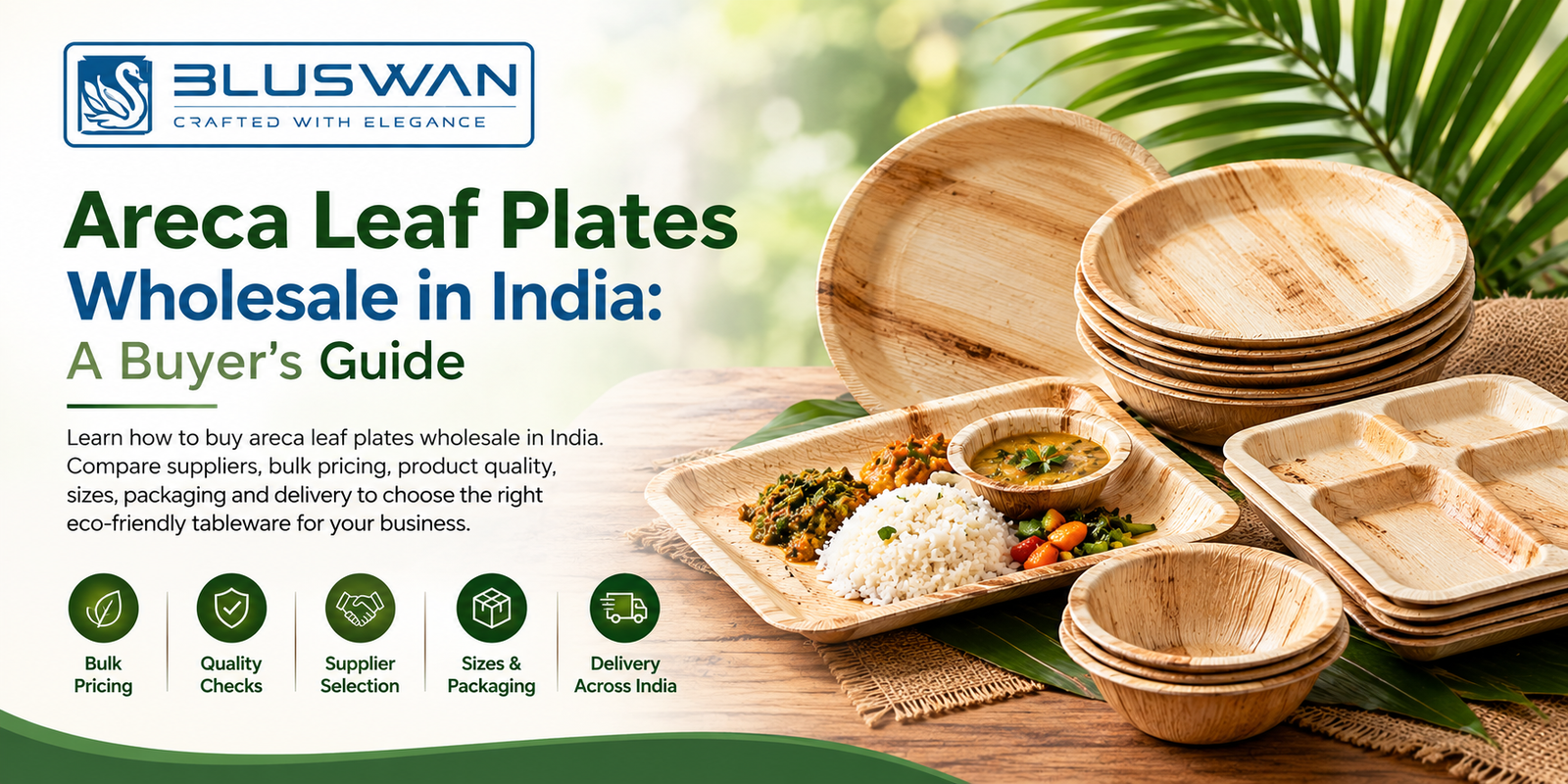
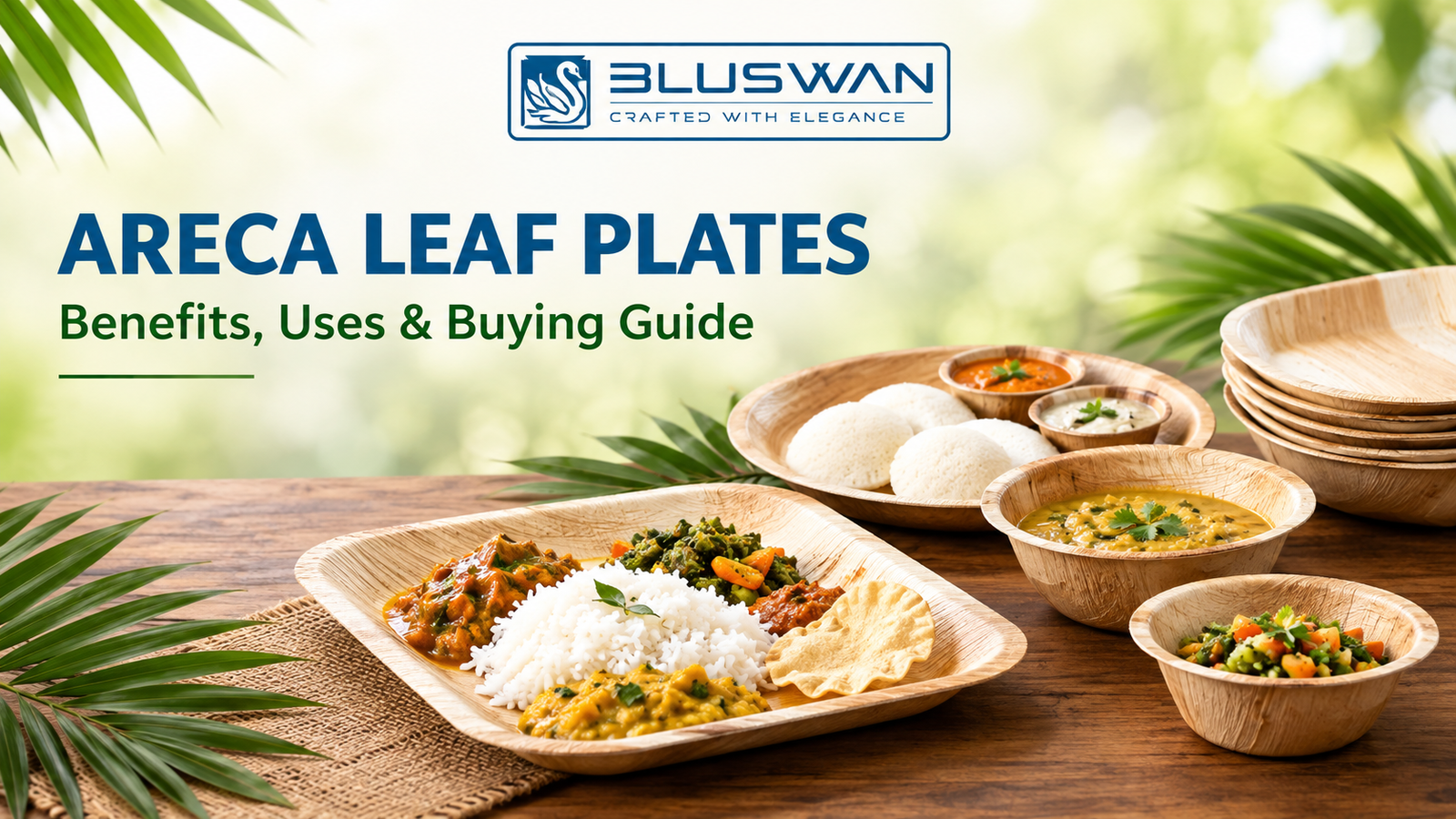
The plates are made from naturally shed areca palm leaf sheaths. Their natural texture and appearance can make them suitable for restaurants and events that want a distinctive presentation.
They can be considered for:
For businesses that want natural-looking tableware, areca leaf can provide an alternative to conventional plastic plates.
Customers don't only experience the food.
They also experience:
Natural-fibre tableware can provide a different visual experience compared with conventional plastic.
For example, an areca leaf plate can complement a traditional Indian meal, while a clean molded bagasse plate can work well in a modern café or catering setup.
Packaging and tableware can therefore become part of a restaurant's overall presentation.
Many businesses now include waste reduction as part of their sustainability planning.
Changing disposable tableware can be one practical step.
However, restaurants should avoid treating one product switch as a complete sustainability strategy.
A broader approach could include:
Reduce → Reuse → Replace → Recycle/Compost Where Appropriate
For example, a restaurant can first identify unnecessary packaging, then consider reusable options where practical, and use suitable alternative materials for products that genuinely need to be disposable.
This approach can be more effective than simply replacing every plastic product with another disposable product.
Environmental considerations should never replace food safety.
Any tableware that comes directly into contact with food should be appropriate for that intended use.
FSSAI's Packaging Regulations define food-grade material as material that is safe and suitable for its intended use and should not endanger human health or cause unacceptable changes to food. The regulations also address packaging materials that come directly into contact with food.
The regulations further state that food-contact packaging materials should be compatible with their intended use, and they include conformity requirements for packaging materials that come into contact with food.
Therefore, restaurants should ask suppliers for appropriate product documentation before making bulk purchases.
Indian and international restaurant menus often include hot and oily foods.
Examples include:
Not every eco-friendly product performs identically.
Restaurants should check:
The best practice is to test samples with the actual food served by the restaurant.
A plate that performs well with dry snacks may not be appropriate for a heavy curry.
Food delivery has increased the importance of packaging decisions.
A takeaway package needs to protect food during:
Kitchen → Packing → Transportation → Delivery → Customer
During this process, packaging may experience:
Restaurants should therefore choose containers based on the food they deliver.
For example, a curry-based meal may require a leak-resistant container, while sandwiches may require a different format.
Bagasse containers and other fibre-based products can be considered where they meet the restaurant's specific performance requirements.
One common misunderstanding is that a product labelled biodegradable or compostable will automatically disappear after it is thrown away.
That is not necessarily the case.
The end-of-life outcome depends on:
For example, some compostable products require specific commercial or industrial composting conditions.
Restaurants should therefore understand the disposal instructions for the products they purchase.
Restaurants can also improve waste management by creating clearly identified collection points.
For example:
Leftover food and organic waste.
Where suitable collection and composting facilities exist.
Materials that can enter an appropriate recycling stream.
Materials that cannot be reused, recycled, or composted through the available system.
Clear signage can help employees and customers understand where different materials should go.
Switching to eco-friendly tableware is only one part of reducing plastic waste.
Restaurants should also examine whether they are using more packaging than necessary.
Ask questions such as:
Reducing packaging at the source can be more effective than simply changing the material.
Even good packaging systems can fail if employees don't understand them.
Restaurant staff should know:
Short training sessions can help reduce mistakes and improve consistency.
The supplier is an important part of the decision.
Before purchasing large quantities, restaurants should ask for:
This is particularly important when a product is advertised as biodegradable, compostable, food-safe, or chemical-free.
A reliable supplier should be able to explain what the product is made from and how it is intended to be used.
Eco-friendly tableware may sometimes have a different purchase price from conventional disposable products.
Restaurants should therefore evaluate the total cost of use.
Consider:
A cheaper plate may not be economical if it breaks easily or is unsuitable for the restaurant's menu.
Similarly, a slightly more expensive product may make operational sense if it performs better for the intended application.
Restaurants do not necessarily need to change every product immediately.
A practical approach is to start with one category.
For example:
Step 1: Replace conventional disposable plates.
Step 2: Test the new plates with the restaurant's menu.
Step 3: Collect staff and customer feedback.
Step 4: Review waste and operational performance.
Step 5: Consider changing additional products.
This gradual approach allows businesses to identify what works before committing to a large-scale change.
Bluswan Indus offers a range of eco-friendly disposable tableware products, including options made from materials such as sugarcane bagasse, areca leaf, rice bran, and wheat bran.
Its product range can be considered by:
Different materials and product formats can help businesses choose tableware according to their food-service requirements.
For restaurants considering a switch, the best starting point is to identify the products currently generating the most plastic waste and evaluate suitable alternatives.
Restaurants can follow a simple five-step approach.
List all disposable plastic products used every week.
Find products that can realistically be replaced or eliminated.
Order samples of suitable alternatives and test them with actual food.
Introduce the selected products gradually.
Track product usage, waste, cost, customer feedback, and operational issues.
This turns sustainability into a measurable business process rather than simply a marketing message.
Natural appearance does not automatically prove environmental performance.
Every food-contact product should be suitable for its intended use.
These terms are not interchangeable.
Always test products with the actual menu first.
A compostable product needs an appropriate end-of-life pathway to deliver its intended composting benefit.
Choosing the correct size can help reduce material use.
Restaurants will continue to need convenient, hygienic, and practical tableware.
The question is increasingly about how businesses can meet those needs while reducing unnecessary plastic and improving waste management.
Eco-friendly tableware can be one part of that transition.
Plant-based materials such as sugarcane bagasse and areca leaf offer alternatives for certain applications, while reusable systems, waste reduction, recycling, and responsible procurement can complement the change.
The strongest approach is not simply to replace one disposable product with another. It is to examine the entire food-service system and identify where material use can be reduced.
Eco-friendly tableware can help restaurants reduce their reliance on conventional single-use plastics, particularly when businesses choose appropriate products, reduce unnecessary packaging, and plan for responsible disposal.
Sugarcane bagasse, areca leaf, and other plant-based materials can provide useful options for plates, bowls, trays, and food-service products.
But sustainability requires more than choosing a product labelled "eco-friendly."
Restaurants should consider:
For restaurants, the goal should be simple:
Use less unnecessary material, choose suitable alternatives where needed, and manage waste responsibly.
With the right approach, eco-friendly tableware can become part of a practical restaurant strategy that combines food quality, customer experience, operational efficiency, and responsible resource use.
Eco-friendly tableware includes plates, bowls, containers, trays, and other food-service products designed with environmental considerations, often using plant-based fibres or other alternative materials.
For many food-service applications, suitable plant-based or certified compostable products can replace certain conventional disposable plastic products. The choice depends on the food and product specifications.
Food-grade bagasse products can be used for many restaurant and catering applications. Restaurants should verify the specific product's food-contact and performance specifications.
Areca leaf plates are made from naturally shed areca palm leaf sheaths. Their suitability and environmental benefits should still be considered together with manufacturing and disposal practices.
Not necessarily. Environmental performance depends on the product's material, production, transportation, use, collection, and end-of-life treatment.
Restaurants can reduce unnecessary packaging, offer cutlery only when needed, use reusable products where practical, improve waste segregation, and train employees on proper waste management.
Check the material, food-contact suitability, certifications, temperature limits, strength, moisture and oil resistance, storage requirements, and disposal instructions.
2026 © All rights reserved by Bluswan indus Pvt Ltd
Powered by : Innoplus TechnologiesYour item has already added in wishlist successfully


